International Volunteering for Seniors: What to Check
Planning international volunteering for seniors? Learn which placements suit you, what to check on health and mobility, and how to choose wisely.
What makes an international volunteering trip suit you later in life: the destination, or the ordinary Tuesday you will live there?
Age is a weak filter. Volunteers can join HeyLocals from 16 with basic English, and projects run across 15 destinations, so eligibility is rarely the deciding point. Judge each placement by its daily load: walking distance, heat, lifting, noise, rest breaks, shared housing and how much social energy the routine expects.
A calm classroom morning can fit better than a dawn conservation shift, or worse. Ask for the normal weekday before you book.
Table of Contents
Placement Types That Suit Senior Volunteers
No country is best for seniors. Compare each placement on its tasks, working language, journey, accommodation, rest opportunities and any stated age conditions. Arrangements differ by location, so a good week in one project says little about the next.
HeyLocals volunteer projects are community-led, and in some cases they include contact with children and adults at risk. You join activities that already exist and help where it is useful, inside the routine the local organisation sets. Short-term volunteering does not replace professional care, and participants never act as substitute parents, primary teachers or sole care-givers.
Judge a placement by what you would do each day.
A 2025 University of Illinois report, drawing on the U.S. Bureau of Labor Statistics' Current Population Survey, found that nearly 290,000 U.S. adults in older age groups volunteered abroad in 2012, more than 60% higher than less than a decade earlier, and that older volunteers' average overseas stay was about 13 weeks, the same average reported for volunteers aged 15–24. The study defined international volunteering as unpaid work in another country. Later-life trips are ordinary placements, so screen them the same way you would at any age. Healthcare access and cost can still narrow your options, which is why local care, travel insurance, transport and total trip costs belong in the comparison before you book.
Match the routine, not the postcard
Usually, no prior volunteering experience is needed to join a project. Basic English is generally required so you can manage everyday conversation and follow instructions, and some activities call for a higher level. Healthcare roles ask for relevant studies or skills. Requirements differ between projects, so read them on the specific page you are considering rather than assuming they carry over.
| Placement type | Typical routine | Skills or language to check | May suit someone who | | --- | --- | --- | --- | | Education and English support | Lessons, reading and conversation with pupils | Basic English; teaching experience helps | Enjoys structured interaction | | Community support and care for older people | Conversation, walks and creative activities alongside local staff | Basic English; patience and everyday skills | Likes companionship and steady daily routines | | Animal and conservation work | Practical tasks with animals or habitats | Basic English; comfort with a physical routine | Is comfortable with outdoor, hands-on work | | Healthcare support | Support roles within local health settings | Relevant studies or skills; check the requirements of each role | Has a relevant clinical or care background | | Teaching and educators | Classroom or teacher-training support | Basic to higher English, depending on the activity | Has classroom experience |
Read the "Typical routine" column as a sample day, not a label. Care for older people and people with disabilities in Antigua shows what that looks like in practice: you join staff at local centres, share conversations and creative activities, and take a role suited to the centre's needs and your background.
Practical rule: Shortlist two or three placement types that match what you enjoy and can manage on most days, then compare those projects on tasks, language, journey, rest and any stated age conditions.
Screening Questions to Ask Before Booking
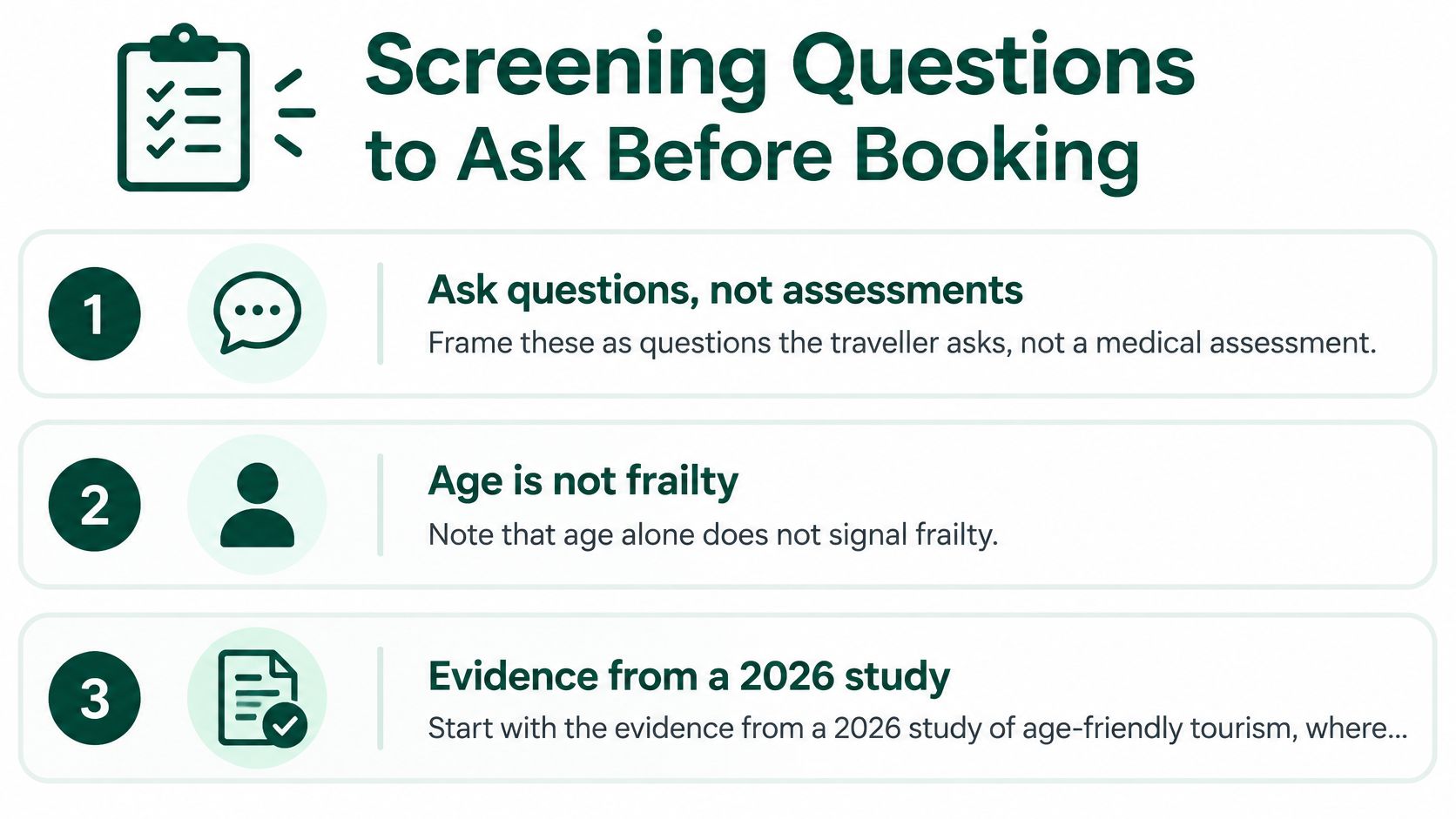
Judge each placement by its daily routine, not by your age. A 2026 peer-reviewed study of age-friendly tourism reported physical-access barriers that included extensive walking distances, uneven terrain, stairs, crowds and limited access to seating or mobility aids. In the study's interview analysis, the theme covering structural and embodied barriers appeared in all 12 interviews, or 100% of the sample. These are conditions to screen for, and they say nothing about whether older travellers can cope. Screen the concrete conditions of a project rather than a stereotype.
Conditions worth confirming
Write the answers down. A structured teaching routine and a physically active conservation routine raise different questions, so compare each answer with the placement type you shortlisted. The same practical check sits inside ethical volunteering abroad: you should know the work before you commit.
| Condition | Why it matters | What to ask the team | | --- | --- | --- | | Daily walk | Affects energy across a full day | How far is the walk from the house to the project and back? | | Stairs or uneven ground | Affects balance and safety | Are there stairs, slopes or unpaved paths on site? | | Lifting or prolonged standing | Affects joints and endurance | Is lifting or standing for long periods part of the role? | | Night shifts | Affects sleep and recovery | Are any duties scheduled after dark or overnight? | | Heat exposure | Affects hydration and recovery | How hot is the work setting, and is there shade and rest time? | | Transport | Affects reliable arrival each day | What connects the house and project, and how long does the journey take? | | Access to local care | Affects planning for ongoing health needs | What medical care is nearby, and how is it reached? | | Emergency response | Affects how quickly urgent help can reach you | Who is the first contact in an emergency, and how would you get to a hospital from the house and the project? |
Ask about the role itself too. Volunteers join activities that already exist and help where it is useful, so confirm what your contribution will be and who supervises it. On any project involving children or vulnerable adults, participants support local staff rather than acting as substitute parents, primary teachers or sole care-givers, so the answer should name the staff member you work alongside.
Ask whether a shorter shift, a scheduled rest period or a non-field role exists if one of those answers doesn't fit your usual day. A missing answer means pause and ask again. Confirm rest areas, pickup timing and who you call if the route changes after rain or a late arrival, because the local coordinator is the person who looks after you on the project and should be able to answer every row in the table.
Health Planning and Insurance Before You Go
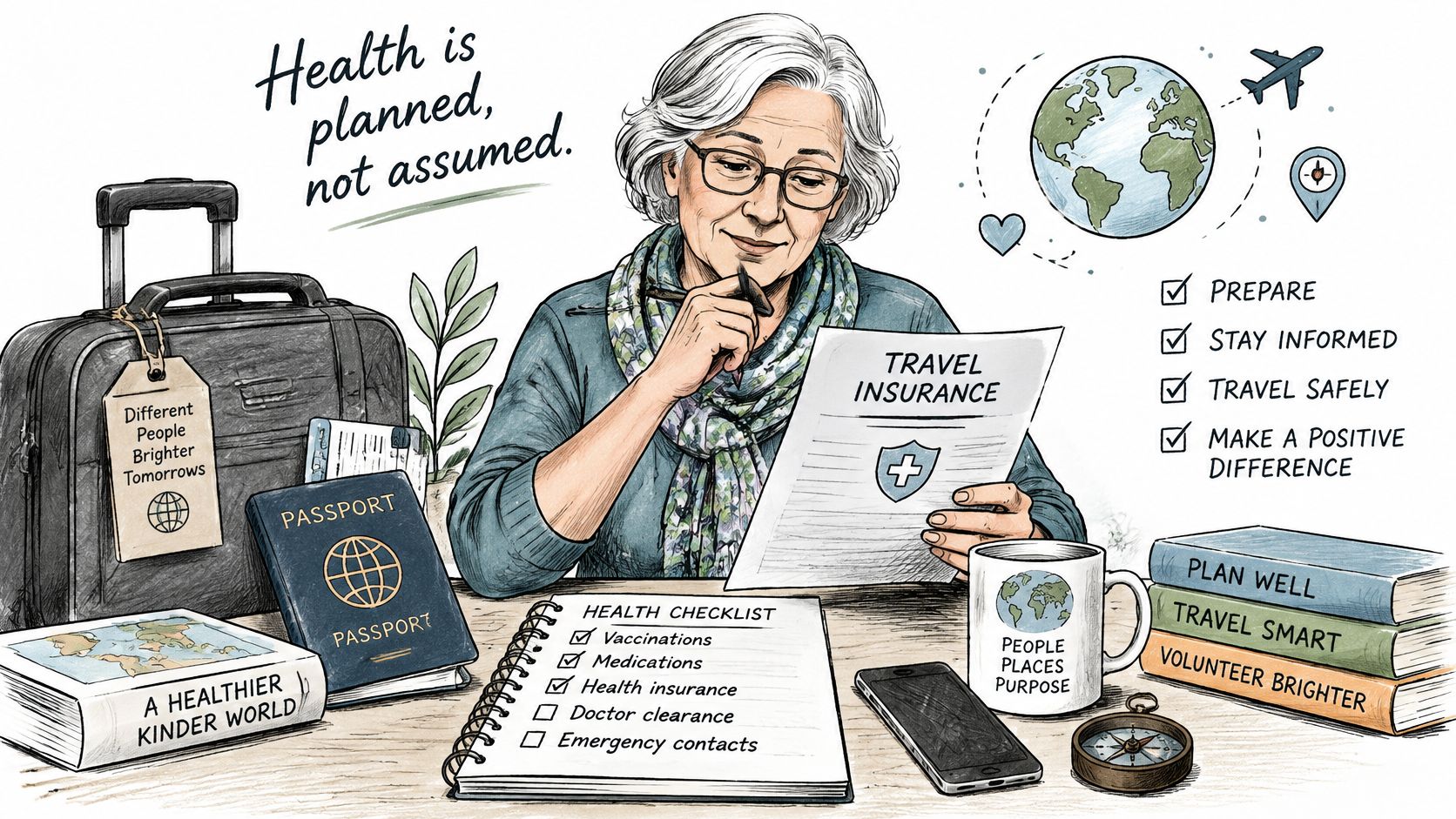
Health is planned, not assumed. A systematic review and meta-analysis of 28 studies found that volunteering may improve physical function by 3.2 points on the 100-point SF-36 physical-component scale (95% CI: 1.09–5.27) and raise physical activity with a standardized mean difference of 0.50 (95% CI: 0.14–0.83). Other research on older volunteers links volunteering to lower mortality, but that evidence is observational and cannot show that volunteering itself extends life. The same review found no established benefit for medical conditions, body-mass index, frailty or nursing-home residence, and rated the evidence quality as generally poor. Plan the trip around the body and routine you have now.
Four steps before you leave
Talk to a clinician. Discuss your travel health, existing conditions, medication needs and the vaccinations recommended for your destination. Book this appointment before you pay a deposit, because its outcome shapes which placements fit.
Share what you choose to share. Tell HeyLocals the health information you want considered when matching you to a placement. That information improves the match. It does not guarantee medical suitability, accessible facilities or on-site clinical support.
Check storage and cover. Ask how medication can be stored safely at the house and at the project, including refrigeration if you need it. Ask your insurer which planned activities and trip lengths your policy covers, and what emergency support includes and excludes. A guide to health insurance for living abroad is a useful starting point before you compare policies, and our notes on volunteer abroad insurance explain what to arrange beside the placement.
Confirm care access in writing. The screening questions table above sets out what to ask about nearby medical care and emergency response, so get those answers before you book rather than after you land. Local coordinators support you during the placement; the programme does not provide on-site clinical care.
Take three questions with you: which of my usual medicines need a travel plan, which activities on this project does my policy cover, and have I received written answers on nearby care?
Leave with written answers, not a general hope that the trip will be fine.
Accommodation, Meals and Daily Life
The fee helps cover the costs of hosting volunteers, including accommodation, meals, organising activities and the people who support volunteers while they are there. Exact inclusions must be checked on each project page, because each local organisation hosts volunteers according to its resources and the project's needs.
Local coordinators look after volunteers while they are on their project. That coordinator is your first contact for day-to-day needs, from a missed pickup to a question about the house.
What to confirm in writing
Room-sharing: Ask whether you'll share, and whether a private room can be requested. A private room is a request to confirm, not an automatic upgrade.
Bathroom access: Ask how many people use it, and whether it is on the same floor as the room.
Noise and house rules: Ask about quiet hours, shared spaces and what happens if the house is full.
Meals: Ask what is served, when, and how dietary needs are handled.
Pickup: Ask who meets you at the airport or station, and what you do if the flight is late.
Emergency contact: Ask who you call, and how that person is reached at night.
A comfortable participant house isn't a hotel. You'll have a bed, meals and people around you. You won't have hotel service, a guaranteed quiet floor or a room laid out to a brochure.
The social setting
You can meet volunteers of different ages and nationalities, and you can travel solo or with others. A peer-aged group, other people from your own country, or a fixed number of companions can't be guaranteed. Group size changes with the project and the season.
Tell the HeyLocals team what would make the daily routine work for you before you book. Rest hours, an earlier dinner or a quieter room are reasonable requests to raise. Before booking, ask which of these items can be confirmed for your chosen project and which still need a written answer.
Where Your Experience Adds Value
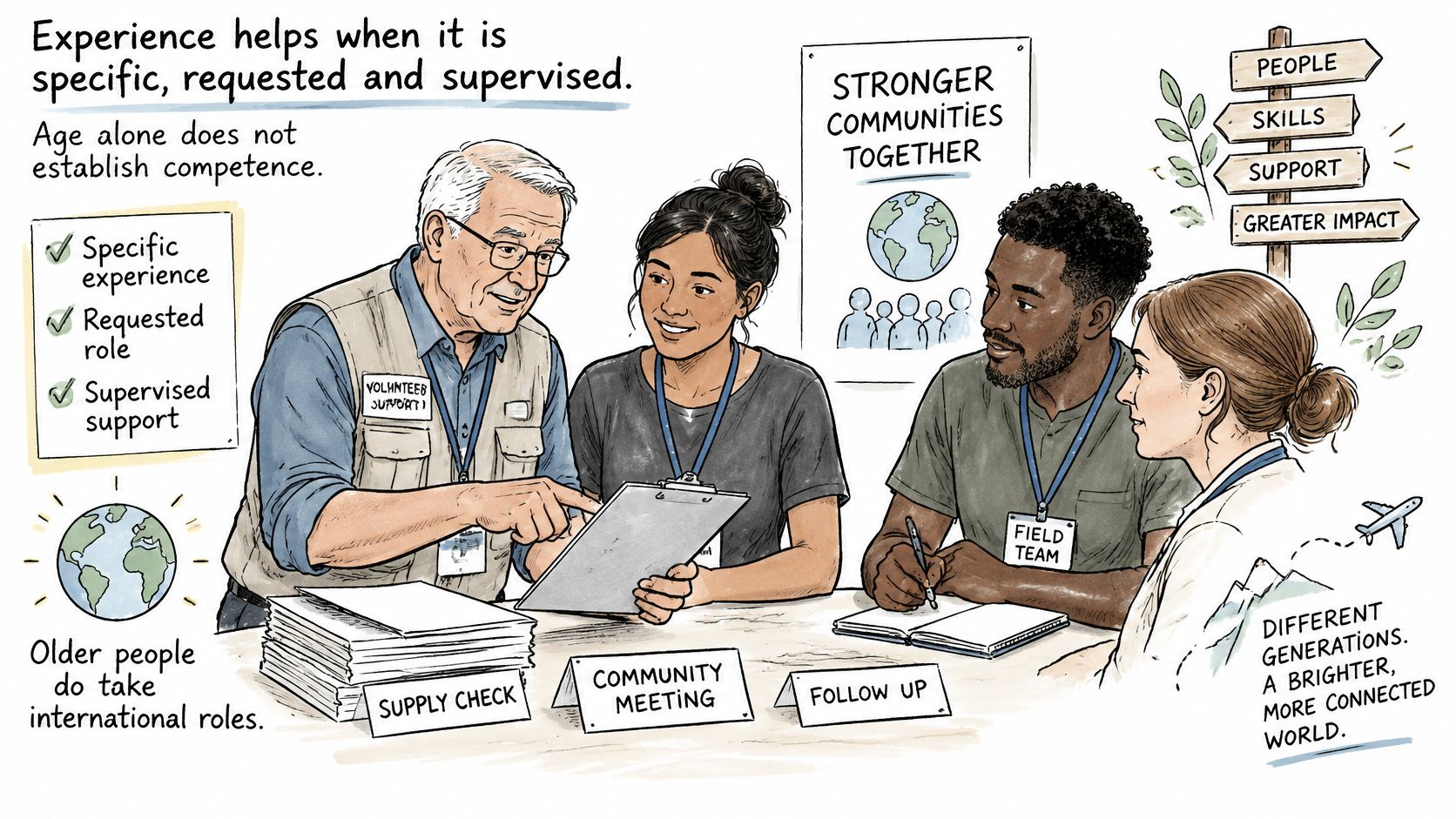
Experience helps when it is specific, requested and supervised. Age alone doesn't establish competence, and a past job doesn't create permission to do regulated or independent work.
In 2024, the United Nations Volunteers programme recorded 167 UN Volunteers aged 60 or older. That shows later-life international roles are real. It still depends on the role in front of you.
What you might offer
Volunteers join activities that already exist and help where it is useful, with what they can offer. Teaching experience may help you prepare a suitable activity with staff. Patience and practical skills may help with agreed daily tasks. A conversational style may suit companionship work. None of these is an outcome you can claim in advance.
Local staff decide what is needed. They can accept, adapt or decline your methods. Short-term volunteering doesn't replace professional care, and participants never act as substitute parents, primary teachers or sole care-givers.
Questions that keep the role clear
Shape of the role: Is it advisory, instructional or hands-on?
Success: Who defines it, the local team or you?
Your methods: Can local staff change your approach?
Training: What is required for teaching, care or wildlife work?
Work beside younger colleagues as an exchange, not a lecture. Their knowledge of the place is as useful as your professional history.
Write down one skill and the activity it would support, then ask whether that activity is on the placement.
How to Complete Your Application Step by Step
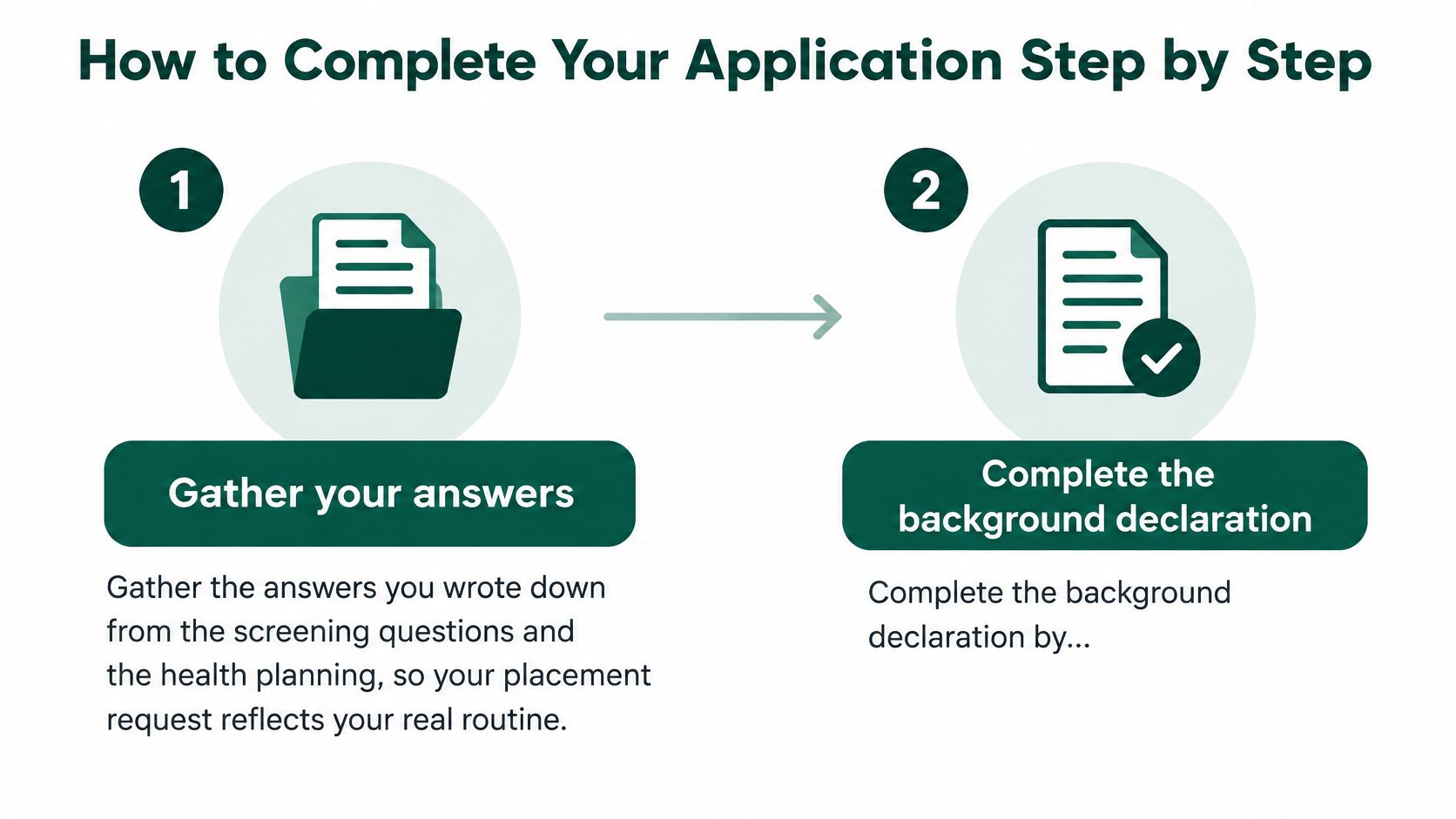
Treat the application as a routine check. Answer every item based on how you judged the placement: by what your days will involve.
Gather your answers. Bring the notes from your screening questions and health plan: walking distance, stairs, heat, transport, rest breaks, diet and the level of social time you want. Put those beside the project's stated conditions before you write anything.
Complete the declarations. State any criminal record accurately and give the health or mobility details the form requests. Some projects include contact with children and adults at risk, so answer those fields with care.
Know which checklist is yours. Staff and in-house volunteers must provide a written application, full CV, at least two verified references before any placement, a values-based interview and verified identity. For roles involving contact with children, they must also provide criminal-records certificates covering each country where they lived for six months or more in the previous five years. Follow the requirements shown for your application.
Share your preferences. Tell the team about room needs, pace, rest and the kind of routine you want, so matching happens before any booking.
Keep a written record. Save dates, inclusions and contacts the team confirms, then compare them with your original questions.
Check the live requirements while you apply. Participant requirements can differ from staff requirements and can change, so rely on the steps in front of you.
Confirm the Placement Before You Book
A listing can look right on screen and still be wrong for the week you can manage. Use the Find my project tool to shortlist two live projects, then read each page closely: dates, what the fee includes, what is charged separately, the working language, and any stated age or eligibility conditions. Inclusions vary by destination, so the page in front of you is the version you book against. The guide on how we select projects explains the standard behind each listing.
Hold it against your notes
Now test the page against the daily routine you want. Ask how far the walk to the site is, whether the accommodation has stairs, what the midday heat is like, how you will travel each day, and where rest fits into the schedule. Ask what a typical day looks like hour by hour. A project that suits you on paper should still suit you at 3pm on the third day.
If an answer is missing or vague, put the question to the team and get the reply in writing before you commit. Book when the written answers describe a week you can keep.
Each trip is community-led and run with local organisations. Local coordinators look after you on site, with support before, during and after your stay. If you are weighing international volunteering for seniors, judge each live project by its daily routine, its accommodation and the answers you still need in writing. Visit HeyLocals to compare current placements against the week you can manage.
In this article