
Alternative Spring Breaks: 7 Meaningful Ways to Spend Yours
Explore 7 alternative spring breaks, from one-week volunteer placements to group service trips, with costs, minimum stays and dates to check.
You've got a week away from lectures or work, a limited budget, and a question that's harder than choosing a destination: can you contribute something useful in that time? Alternative spring breaks can make sense, but only when the project's needs fit your actual availability.
Take this planning example: a student checks the programme calendar before booking, chooses a manageable support role, arrives for orientation and joins a routine local staff already run. They don't arrive expecting to lead a classroom or redesign a conservation project. They follow the agreed schedule and leave any unfinished work with the person supervising it.
A week can be a worthwhile first experience when the host welcomes that duration. It won't solve an educational or environmental problem, and it doesn't have to justify itself with a dramatic transformation.
The options below aren't a popularity ranking. Compare flight and transfer time, total budget, confirmed minimum stay, activity type, language and dates. Also, distinguish between joining an individual programme, travelling with friends and booking an organised group departure.
Table of Contents
1. HeyLocals
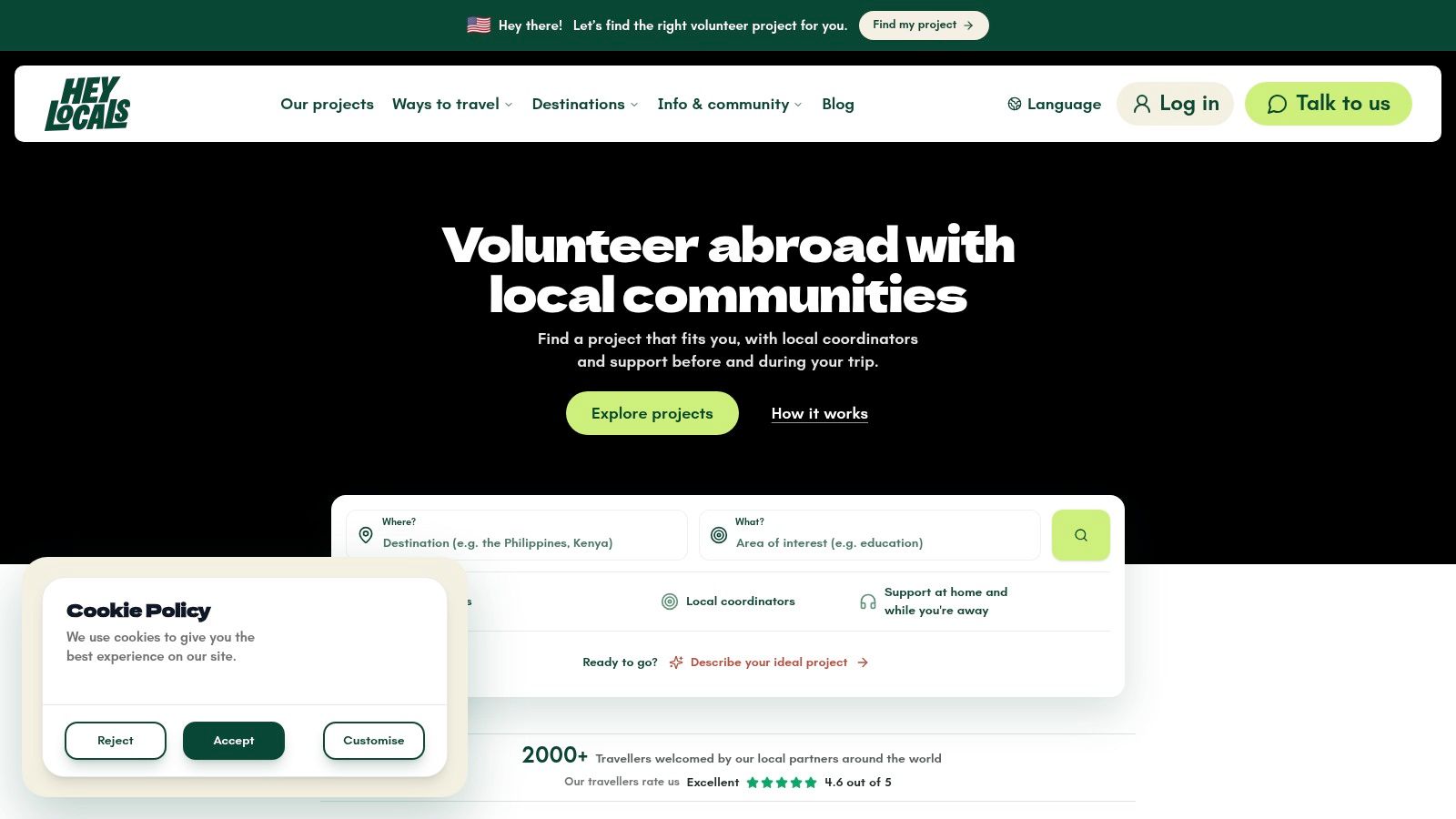
A volunteer with exactly seven free days faces a specific problem: which placements accept a stay that short, and which need longer? HeyLocals suits travellers who want help matching a locally hosted project to their dates, interests and experience. You join work that is already running, with preparation and support before, during and after the trip.
Projects cover education, childcare, environmental protection, wildlife conservation, women's leadership and healthcare. Requirements vary, so a beginner-friendly support placement and a healthcare role are not interchangeable: medical projects may ask for relevant studies, while most placements need no previous volunteering experience beyond basic English.
Choose the role before the destination
Community school teaching in Kandy, sea turtle conservation in Bali and medical support in rural Palawan are candidates to investigate for a short break, not guaranteed recommendations or confirmed vacancies. Start with a live project page that explicitly accepts your stay length, then confirm the timetable and what a newcomer can reasonably do.
For a concrete look at ongoing tasks, volunteering at a soup kitchen in Seoul involves helping staff prepare ingredients, serve meals and clear up. That description makes the role understandable, but it doesn't establish a minimum stay or availability for your dates.
Costs need the same scrutiny as the role. Packages combine the volunteer placement, accommodation, in-country coordination and transfers, with local coordinators supporting you on the ground, but inclusions vary by destination because each organisation hosts volunteers according to its resources. International flights, insurance, visas and vaccinations sit outside the fee and need their own budget line.
Eligibility is clear on paper. You must be at least 18 to book, and under-18s travel only with written consent from a parent or legal guardian on placements designated suitable for them. Participants are asked to declare criminal records. Group logistics also differ from a dedicated student departure: some projects sit within an international network of volunteers, and where they don't, organised group trips bring people with the same motivation together.
One-week options do exist: teaching in Zanzibar is listed from one week and from US$970. That's a useful starting point, not a substitute for checking the chosen project's dates, language expectations and inclusions.
Practical rule: choose a role the host can explain clearly, including who supervises you and who continues the work after you leave.
2. International Volunteer HQ (IVHQ)
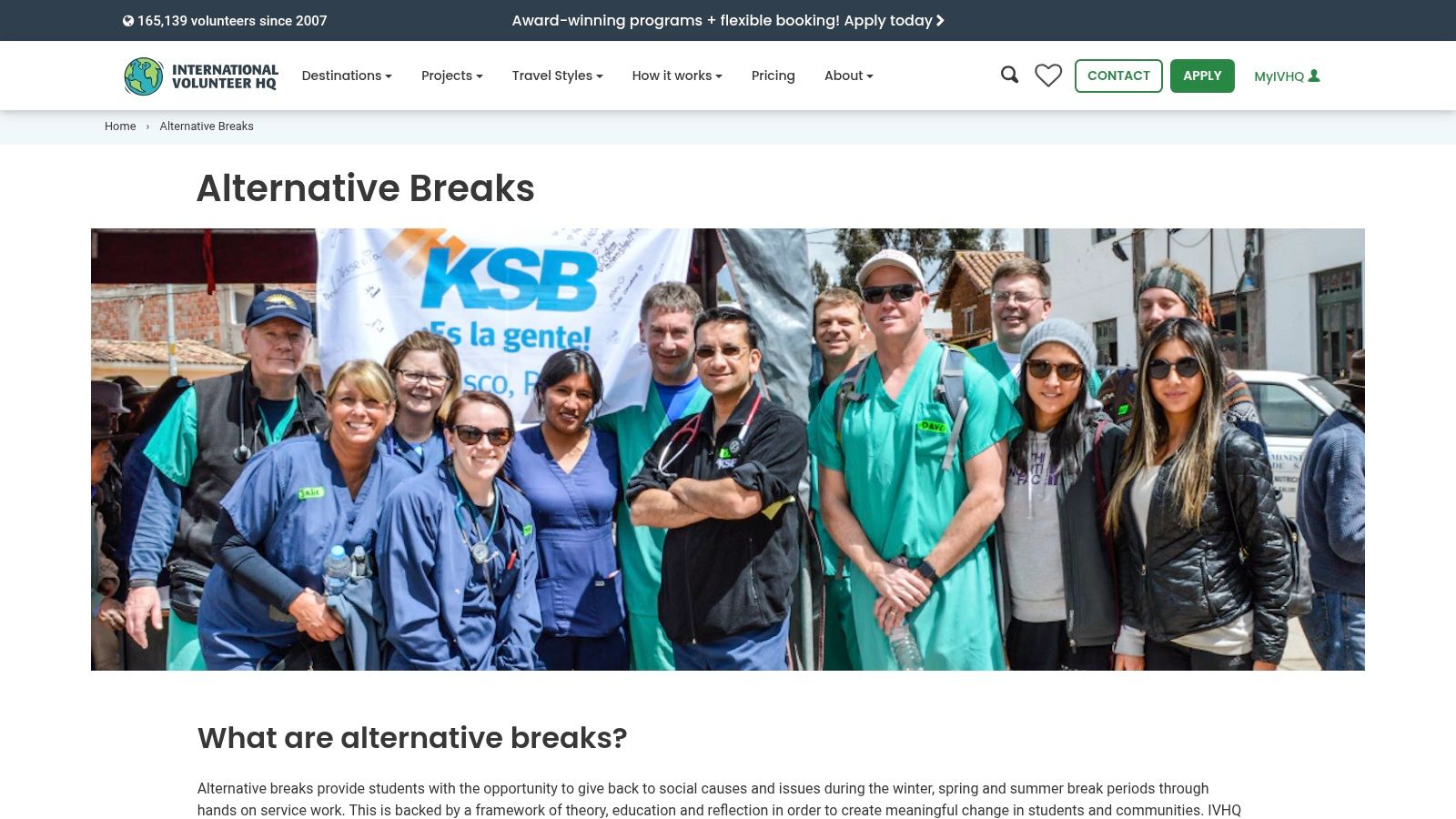
IVHQ's alternative-break volunteering options include programmes starting at one week, in destinations such as Guatemala, Bali, Spain and Ghana. Treat that listing as a starting point for dates, not proof that a seven-day break produces seven days of project work: arrival, orientation and departure usually consume part of the week.
The useful comparison is fee structure against operating days. A registration fee can hold your place while telling you little about which days the project runs, so check the calendar before paying. If an itinerary shows Sunday arrival, Monday orientation and a weekend closure, count the remaining supervised days before assuming a full week.
Project areas span teaching, childcare, conservation and community support, but accommodation, orientation and in-country support do not imply identical meals, transfers or daily transport at every destination. I'd favour a clearly bounded support task: in teaching or childcare, ask who supervises you and who carries the work forward after you leave.
If the shortlist points somewhere hot or humid, Misaj's tropical travel protection guide is useful for packing questions, separate from judging whether the role is suitable.
3. Projects Abroad
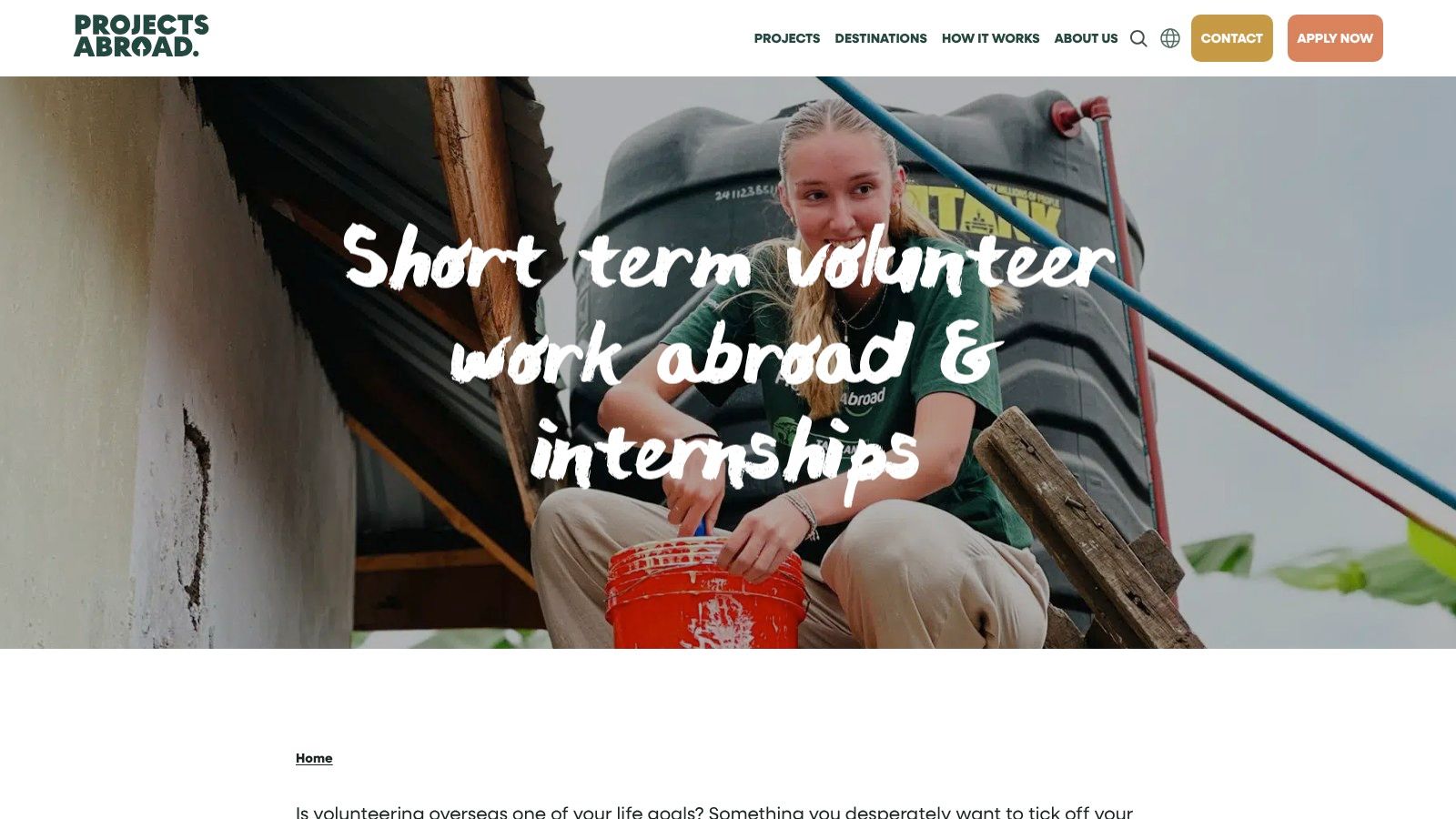
A structured itinerary can be reassuring if you don't want to coordinate the project, accommodation and daily arrangements separately. The trade-off is less freedom over dates and duration, particularly when you're considering a scheduled group programme.
Projects Abroad's short-term volunteering options distinguish adult projects and team trips from High School Programs for ages 15–18. Activities span teaching, childcare, conservation and medicine, with schedules and requirements varying by programme.
That distinction matters for families and younger students. An adult placement with flexible arrangements isn't equivalent to a teen itinerary with a defined schedule and additional staff support.
A structured programme is useful when its dates fit your break. It isn't useful if you have to miss the introduction or leave before the agreed finish.
Check the responsibility, not just the subject
For education projects, look for a teacher-led support role rather than an expectation that a short-term visitor will take over lessons. For medicine, your interests don't establish your competence: the placement should explain which activities match your studies or skills and who supervises them.
The advantage is a choice of distinct programme formats and specialisms. The limitation is that short-term doesn't automatically mean suitable for a standard spring break.
Before committing, compare the full itinerary with your door-to-door travel schedule. If a cultural introduction and project component need more time than you have, choose a simpler placement instead of asking to compress both.
4. Global Volunteers
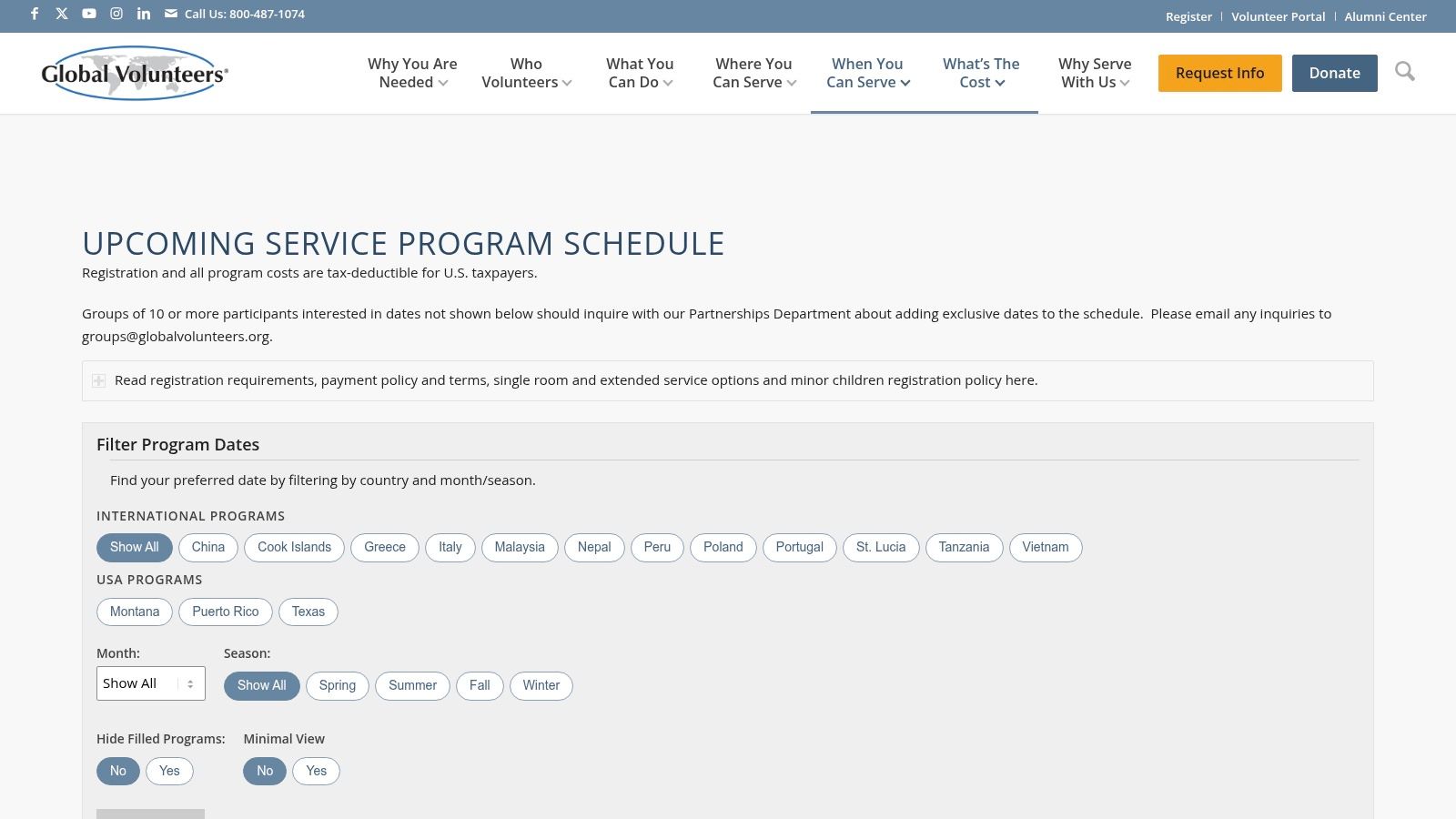
Global Volunteers runs team-based departures with published start dates, which suits readers who would rather pick a fixed programme than build a trip around an individual arrival. The Global Volunteers dates and fees calendar lists international programmes that are generally two weeks, with one-week options in many locations; destinations include Nepal, Peru, Tanzania and Vietnam.
For seniors, families and anyone managing a physical limitation, the practical descriptions matter as much as the service theme. Selected listings provide mobility and physical-demand information, but confirm the specific placement before you book. A useful question is concrete: "On a typical project day, how much time is spent standing, walking on uneven paths, climbing stairs, lifting materials, or travelling between lodging and the site?" If the answer conflicts with what you can comfortably do, a different departure date or location is the safer choice.
A clear schedule still needs a realistic journey
Published dates and fees make it easier to match a specific departure to your available leave. The trade-off is duration: a two-week team programme may exceed a standard academic break, so the one-week listings deserve the closest look. Budget and access belong in the same check. Compare the full package and excluded expenses against the daily demands described for your placement, because a lower-priced programme with long commutes or stairs you cannot manage is unlikely to be the workable option.
Our guide to short-term volunteering abroad explains the wider duration question: useful short-term participation needs a defined role and continuity, and a busy itinerary alone rarely provides either.
I'd choose a manageable journey and a confirmed schedule over a distant destination that leaves little room for orientation. Count door-to-door travel days inside your break before you commit.
5. GoEco
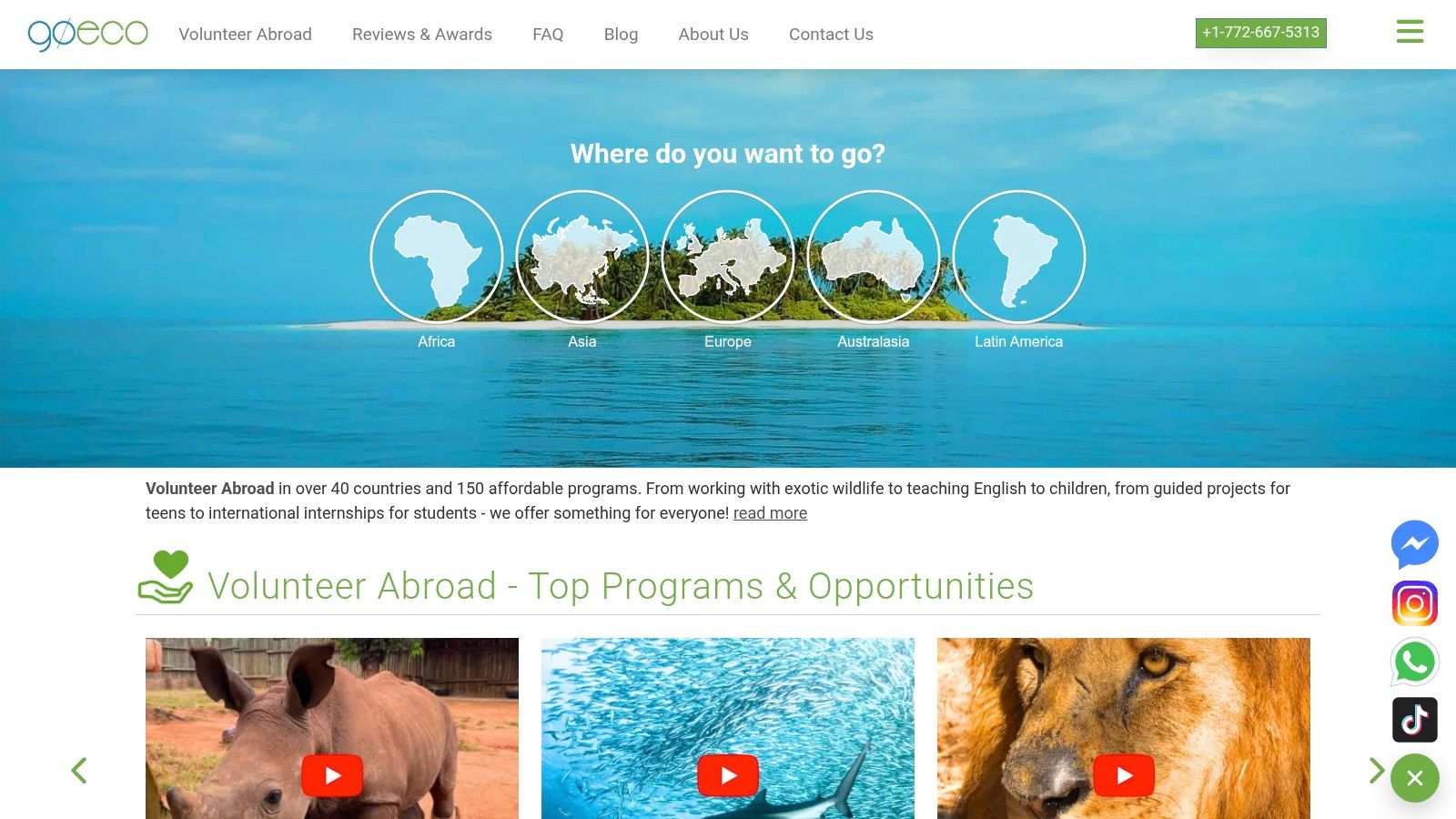
For parents, the first question isn't whether a project accepts families. It's what each family member can safely and usefully do, and whether the daily routine works for the youngest traveller.
GoEco offers conservation, wildlife and community placements, including family-oriented options. These deserve a separate comparison from student departures because accommodation, supervision and activity expectations can differ substantially.
A family-friendly label doesn't tell you whether children participate alongside adults throughout the day. Check when parents remain responsible, whether tasks differ by age and what happens when a child needs to stop or rest.
Match the routine to your family
The benefit is an option beyond university-focused trips, with project types that may suit shared interests. The constraint is that age eligibility, dates, fees and inclusions remain placement-specific.
Accommodation: check room arrangements and whether family members stay together.
Daily activity: establish the walking, lifting, outdoor exposure and travel involved.
Supervision: identify who directs activities and when a parent must accompany a child.
Cost: compare each family member's fee alongside meals, transfers and separate expenses.
Wildlife programmes need another layer of care. Attractive animal encounters aren't evidence of sound conservation practice, and handling wildlife shouldn't be treated as a visitor benefit.
Before choosing a turtle-related placement, read our guide to rescuing sea turtles and focus on supervised routines that serve the project's existing work. A modest maintenance or monitoring task can be a better fit than an itinerary built around memorable photographs.
6. Habitat for Humanity Collegiate Challenge
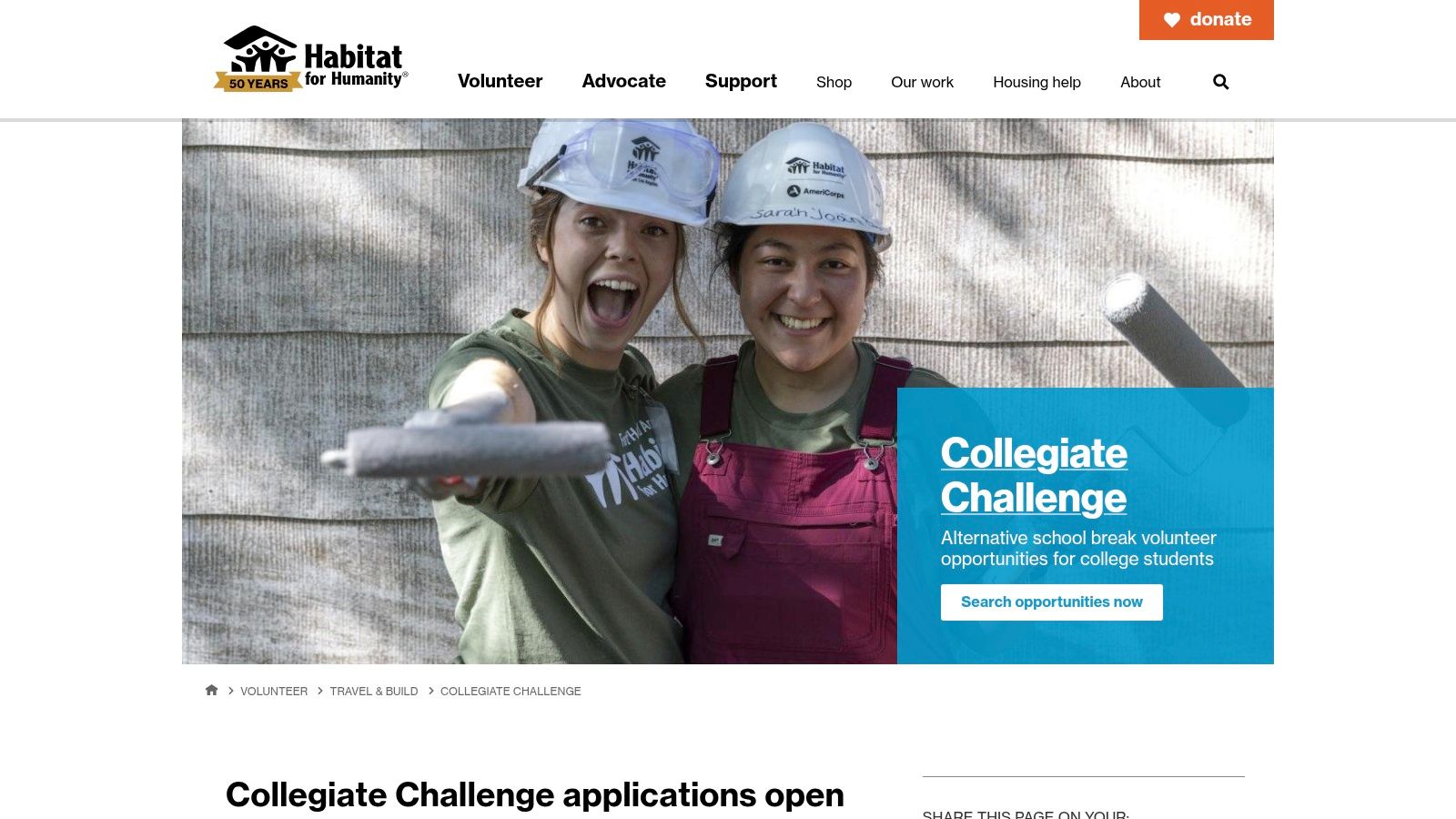
A 12-person campus group with two cars and a modest budget faces a different planning problem than a solo traveller heading overseas. A domestic housing-focused programme removes the need to coordinate international arrivals and fits inside a single week of term break.
Habitat for Humanity's Collegiate Challenge offers weeklong U.S. placements for volunteers aged 18 and older, with groups recruiting their own participants. Work can include homebuilding, repairs, ReStore activities or related tasks, depending on the local affiliate.
Your group supplies its own coordinator for recruitment, transport, payments and communication with the host. One confirmed build slot is only the starting point.
Group-planning insight: appoint a logistics lead before collecting money. Accommodation, meals and transport each need their own arrangement for every participant, on top of the placement itself.
Practical work without assuming specialist skills
Many opportunities don't require previous construction experience, but beginners still need instruction and must work within the site's safety rules. Ask what tasks are planned, what physical demands to expect and how supervisors allocate work.
Dates, per-person contributions and housing arrangements are set at affiliate level, so a figure another campus paid last year is an unreliable budget template. Ask your host directly what the contribution covers, and whether tools, safety equipment and meals come with it or sit outside it. Get that answer in writing before you set a fundraising target.
Our guide to volunteering abroad for students can help you weigh this domestic route against an international placement. If you're applying alone, establish whether there's a suitable joining route before planning around a group-based opportunity.
7. Appalachia Service Project (ASP)
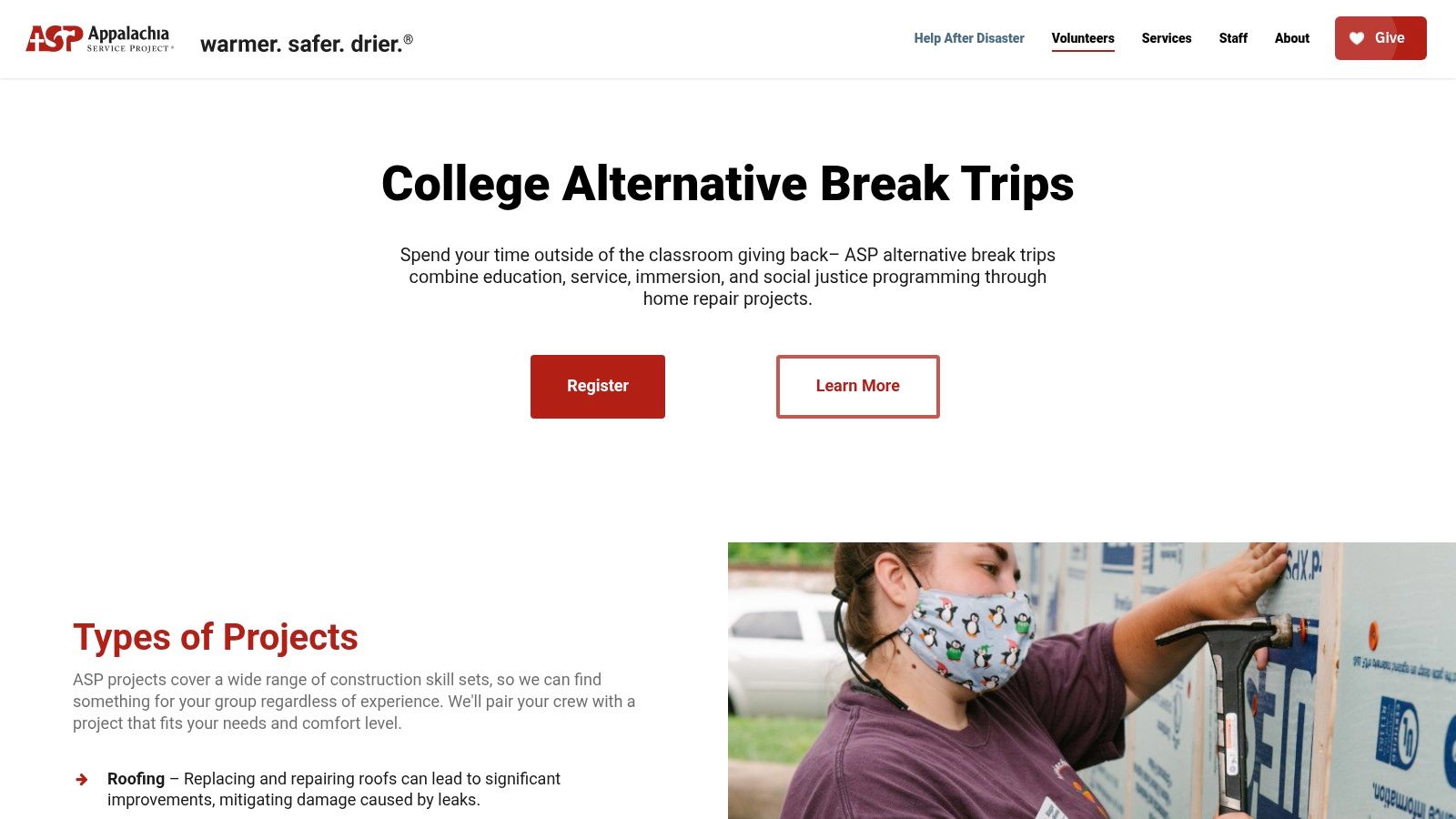
ASP is a practical comparison for college groups interested in home repair and community-based service in Southwest Virginia and Northeast Tennessee. Its defined weekly rhythm helps groups understand where travel, preparation and work fit.
ASP's college break trips generally run Sunday through Saturday, with service Monday through Friday, and list a fee of US$75 per volunteer per workday. That fee covers lodging, breakfast and dinner, lunch supplies, building materials, staff guidance and educational programming.
Those inclusions make budgeting easier, but they don't remove the need to organise the group's journey. Groups provide their own vehicle and transportation, and must meet crew supervision requirements.
Check crew readiness before recruiting
The format has real strengths: a defined repair focus, staff guidance on site and educational activities that run alongside the practical work. The organising load sits with the group. You need a suitable crew, your own transport, responsible adult supervision and whatever checks the host requires. Partial scholarships can reduce the cost, but confirm the application arrangements before treating that funding as secured.
Before committing, talk through the physical demands with your crew: lifting, kneeling, tool use and the site conditions you will face, rather than the ones the photos suggest. ASP's supervision procedures belong to this programme specifically, so don't assume they match another organisation's participant process.
Activity totals are easy to report. Completed repairs are harder to verify. Howard University's account of its spring-break service illustrates reporting centred on hours served; when comparing any placement, also look for locally defined priorities, beneficiary feedback and a plan for continuing unfinished work.
Ask the ASP coordinator directly: what will your crew finish by Saturday, and who takes over anything left incomplete? The answer tells you more about the trip's value than a count of hours served.
Alternative spring break options side by side
These programmes solve different problems, so the table works as a filter rather than a ranking. Minimum stay decides what fits a week-long break, fee inclusions decide your real budget, and the last column shows the organising that stays on your desk.
| Programme | Minimum stay | Best for | Fee inclusions | What you still organise | |---|---|---|---|---| | HeyLocals | One week at some placements | Travellers seeking locally hosted projects and guidance | Accommodation, meals, airport collection, activity coordination and support, varying by destination | Flights, travel insurance, visas, vaccinations and a criminal-records check sit outside the package | | International Volunteer HQ (IVHQ) | One week | Students seeking flexible international placements | Many programs include accommodation, orientation and in-country support | Flights, insurance, visas and personal expenses | | Projects Abroad | Varies by program; some teen placements run two weeks | Adults or teens seeking structured projects | Varies by program | Travel and personal expenses; confirm dates and duration before budgeting | | Global Volunteers | Usually two weeks; one-week options in many locations | Volunteers seeking team-based service with published schedules | Program fees are listed by date and destination | Availability, mobility requirements and extra costs for your dates | | GoEco | Varies by program | Families seeking conservation, wildlife or community projects | Varies by program and offer | Age rules, dates, and which meals and transfers are covered | | Habitat for Humanity, Collegiate Challenge | One week | College-age student groups interested in housing-related service | Set by each local affiliate | Transport, meals and accommodation depend on the affiliate you book with | | Appalachia Service Project (ASP) | One week | College groups seeking home-repair service in Appalachia | Lodging, meals, lunch supplies, building materials, staff guidance and educational programming | Crew transport plus the host's adult-supervision and screening requirements |
Two patterns stand out. The US-based group programmes push logistics onto the group: Habitat defers arrangements to each affiliate, and ASP expects crews to arrive with transport and supervision already sorted. The international placements bundle hosting but leave flights, visas and insurance on your side, so compare the total trip cost rather than the headline fee. On a seven-day break, start with the minimum-stay column; anything requiring two weeks drops out before you compare anything else.
How to Plan Your Week Without Losing Sight of the Project
Plan your seven-day alternative spring break backwards from the departure flight. As an example, reserve the opening day for arrival and transfer, the next for orientation and a supervised introduction, the middle of the stay for agreed tasks, and the closing period for handover and departure. This is a planning model, not a promise of project days.
Check the host calendar before booking school support. The Kenyan school-calendar coverage published by Nation places the 2026 first term through April 2, followed by a holiday from April 7–24. For Kandy, Ada Derana's published Sri Lankan calendar lists a school holiday from April 11–19, 2026. Confirm the individual school's operating dates rather than treating Easter holidays as universal.
Prepare to join, not take over
Read the role description, complete preparation and respect agreed attendance. Fit around the team's existing work, and confirm who supervises you and what continues after you leave. A combined cultural-plus-project itinerary may need longer than your break allows.
For packing, use travel kit recommendations from Adventure Medical Kits as a starting point alongside the project's own preparation information.
Role: actual tasks, supervision and handover.
Minimum stay: confirmed duration, including arrival arrangements.
Language: the level needed for instructions and activities.
Practical demands: mobility, lifting, commuting and daily routine.
Dates and budget: operating calendar, flight and transfer time, fee inclusions and separate expenses.
Compare the actual project pages, then use our free two-minute questionnaire or Find my project tool to discuss your dates with the team. That gives you a concrete next step without committing to a destination before you know whether the role fits.
HeyLocals helps you compare locally hosted volunteer placements and prepare for the routine you'll join, with guidance before, during and after your trip. Visit HeyLocals with your available dates, interests and travel preferences so we can help you assess a realistic spring-break option.
In this article