5 Family Volunteering Vacations: Ages, Safety and Costs
Compare family volunteering vacations by age fit, safeguarding, costs and preparation, so you can pick a placement your whole family can manage.
The popular advice to choose a cause your children love is only a starting point. A family volunteering trip isn't a holiday with a good cause attached. Age fit, supervision and the adult's responsibilities come before destination appeal, particularly when patients or animals are involved.
HeyLocals offers family volunteering trips, but volunteers join existing local activities. They never act as substitute parents, primary teachers or sole carers. Parents shouldn't assume that a project coordinator also provides childcare, or that travelling together means everyone can enter the same workspace.
Preparation also means checking medical cover, including the conditions for emergency air evacuation abroad, rather than assuming ordinary travel insurance covers every placement activity.
The five placements below span dental clinics and animal shelters. Judge each against the same practical questions: Who can participate safely, what safeguarding applies, what does the fee cover, and what must your family prepare before departure?
Table of Contents
1. Dental volunteering in Antigua
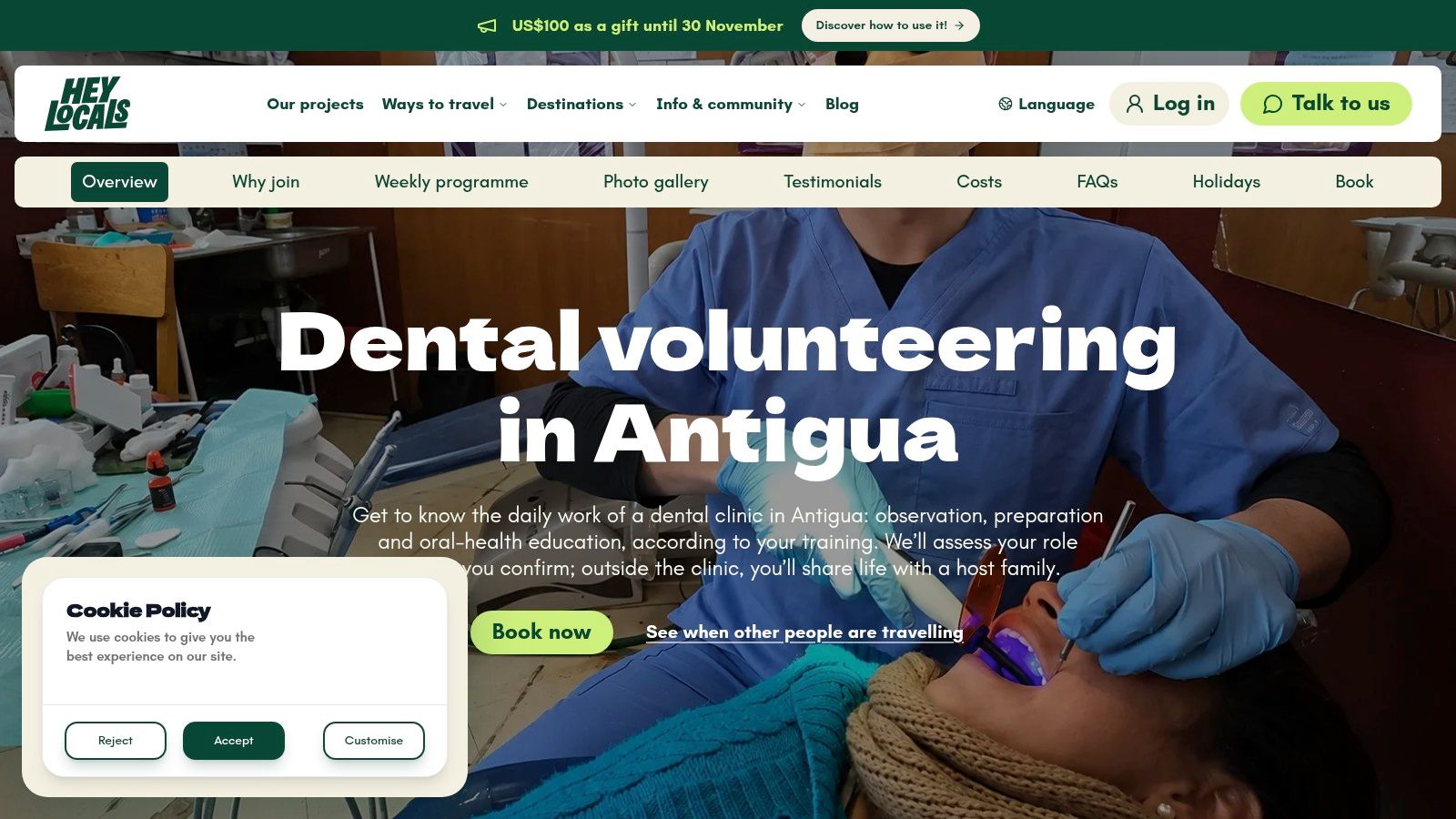
Best considered for a family with a genuine healthcare interest, not a child who wants to help people. The clinic activities include observation, preparation and oral-health education, according to your training. We assess your role before you confirm, and life outside the clinic includes staying with a host family.
That role assessment matters more than enthusiasm. A parent with relevant training and an untrained teenager won't necessarily receive the same responsibilities, while a younger child may not have a suitable clinic role at all. Don't book on the assumption that a child can sit beside you throughout a clinical shift.
Decide who can actually join the work
Use our medical volunteering guidance to prepare your questions about eligibility. Send the team each traveller's age, relevant studies, practical skills and language ability so that the proposed responsibilities can be assessed individually.
Age suitability: Establish whether every family member can participate, observe or needs a separate arrangement outside the clinic.
Adult responsibility: Identify who remains responsible for your child if you're occupied with an approved task.
Clinical boundaries: Observation doesn't authorise treatment, and preparation work must follow staff instructions.
Patient privacy: Request permission before observing, and keep phones and cameras away unless the clinic explicitly authorises their use.
Practical rule: If supervising your child prevents you from following clinical instructions, the proposed family arrangement needs to change.
Budget for the arrangement, not just the placement
The fee helps cover hosting costs, including accommodation, meals, activity organisation and the people supporting volunteers. Exact inclusions vary by destination, so obtain the Antigua breakdown before comparing the total with another clinic placement.
Keep flights, insurance, visas, health preparation and personal spending separate until their status is clear. Confirm the host-family sleeping arrangements, dietary needs and travel between accommodation and the clinic, without assuming that every transfer is included.
Before departure, practise basic English for instructions and explain patient consent to your children. This placement makes sense when the clinic can assign appropriate roles without diverting staff into supervising visitors. If your main aim is uninterrupted time working together as a family, a clinical setting may be too restrictive.
2. Dog and cat shelter volunteering in Manuel Antonio
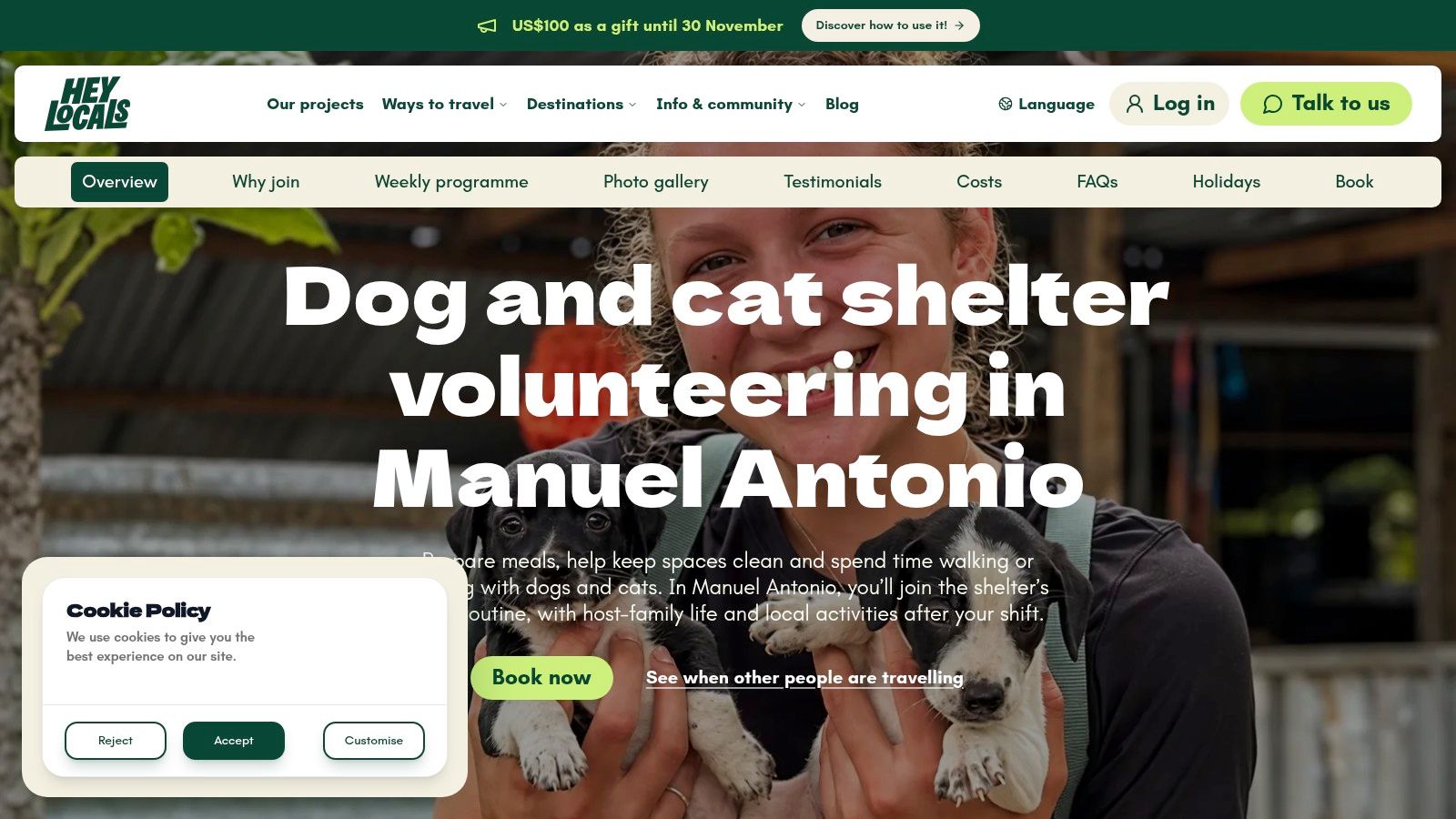
Meal preparation, cleaning spaces, walking dogs and playing with animals offer a more concrete shared routine than clinical observation. In Manuel Antonio, volunteers join the shelter's daily work, with host-family life and local activities after the shift. The work includes cleaning, not just animal contact.
That distinction is useful when assessing children's interest. A child who enjoys pets may dislike noise, dirty bedding or being told not to approach an animal. A suitable placement needs tasks the child can follow safely, not permission to interact with every dog or cat.
The NCVO discussion of family-volunteering outcomes describes reported benefits for communication and teamwork, but also warns that excessive demands can increase family stress. Build a manageable routine rather than filling every available hour with service and sightseeing.
Match the task to the child
Use our guidance for parents planning volunteering abroad to organise the family discussion before confirming participation. Describe your children's experience, including fear of barking, allergies or difficulty following instructions around animals.
Handling boundaries: Let shelter staff decide which animals volunteers may approach, walk or play with.
Cleaning safety: Confirm which tasks involve chemicals, waste or restricted spaces before assigning children a role.
Parent supervision: Don't assume that a shelter worker can supervise your child while managing an animal.
Recovery time: Leave space after the shift for washing, rest and a change of plans if someone is overwhelmed.
Check the less visible costs
Confirm what the host-family arrangement includes and whether local activities have separate charges. Check transport to the shelter, laundry arrangements and any equipment you're expected to bring.
Closed footwear, washable clothing and clear handwashing routines are sensible preparation. Discuss animal-related health precautions with a travel-health professional and describe the actual activities to your insurer.
This is a stronger option for shared practical work than dental volunteering, provided the shelter approves suitable tasks for everyone. It's a weaker fit if the family expects guaranteed cuddling time or wants staff to accommodate a child who won't follow handling rules.
3. Dog and cat shelter volunteering in San José
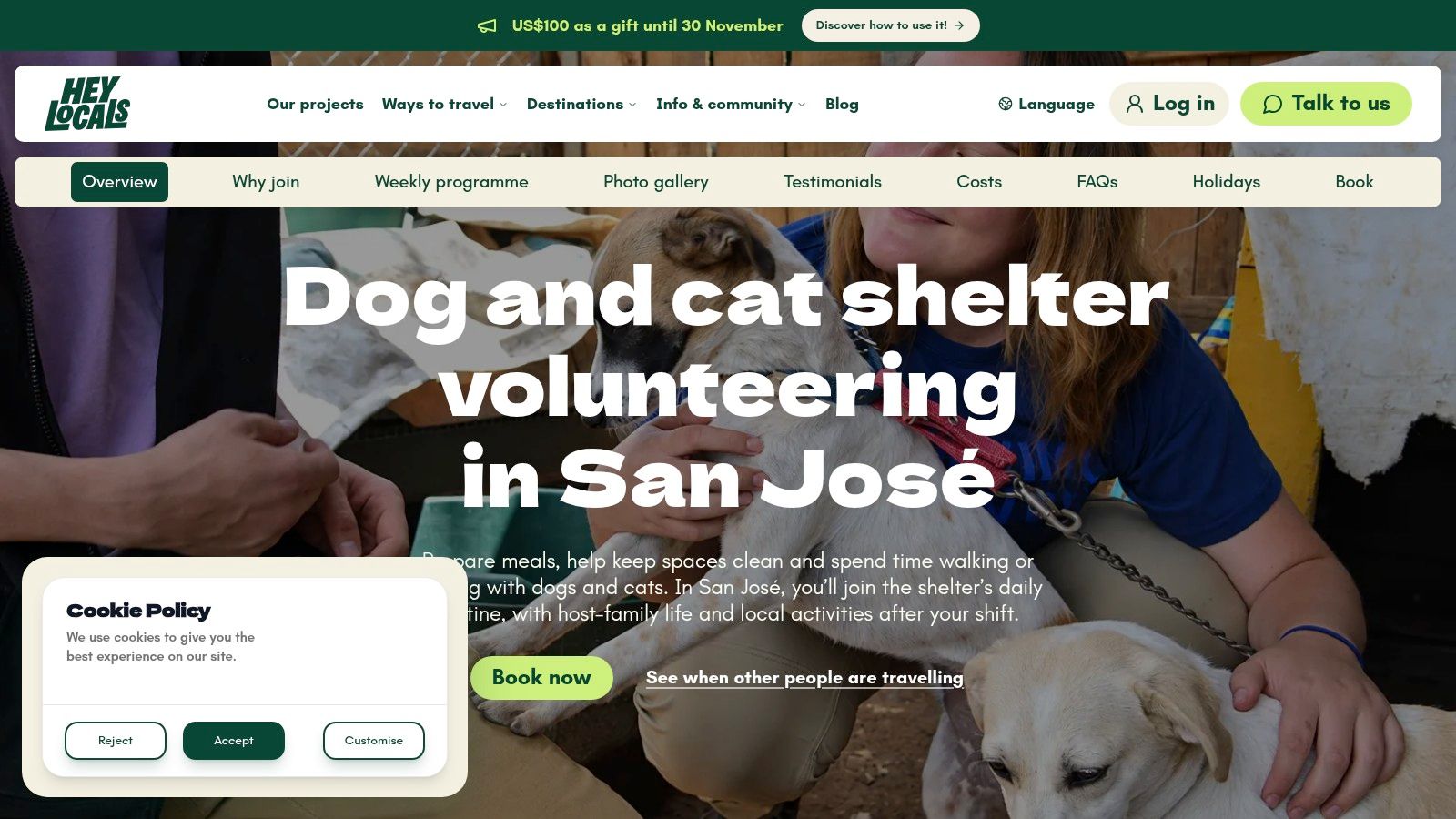
Choose between the San José and Manuel Antonio shelters by comparing the proposed routine, not by assuming that similar activity lists mean identical family arrangements. The San José placement also involves preparing meals, keeping spaces clean, and walking or playing with dogs and cats. Host-family life and local activities follow the shift.
The available descriptions don't establish a difference in minimum age, staffing levels or accommodation layout. There's no sound basis for declaring either shelter safer or more suitable for younger children without an individual assessment.
Test an ordinary working day
Say one adult is allocated cleaning while another family member prepares food. Can the youngest participant complete an approved task nearby, or would an adult need to step away from volunteering to supervise them? That's the practical question to resolve before comparing destinations.
A family placement works when the shelter can use your help without reorganising its care around your children.
Ask the team to clarify the proposed shift, task allocation and supervision arrangement. Our local coordinators provide project guidance and support, but parents should still establish who is responsible for each child throughout the day.
Short-term volunteering deserves scrutiny beyond whether participants enjoy it. The report hosted by the Dutch House of Representatives discusses risks including dependency, disruption and displacement of local work, supporting a simple test: does your contribution assist an ongoing programme rather than create work for visitors?
Compare the whole family cost
For this placement, prepare a household budget with separate entries for:
Published fee inclusions: Record the confirmed accommodation, meals, transfers and coordination arrangements.
Travel expenses: Add flights, visas where applicable, insurance and transport not included.
Daily practicalities: Allow for laundry, personal purchases and activities outside the placement.
Changes and emergencies: Keep funds available if someone can't continue participating.
Before departure, teach children to wait for instructions rather than reaching towards an animal. Practise calm behaviour and explain that staff may restrict contact for welfare or safety reasons.
Choose San José when its confirmed daily arrangements fit your household, not because the task list sounds more flexible than it is. Cleaning and food preparation can be useful contributions, but they still require instruction, consistency and adult attention.
4. Dental volunteering in San José
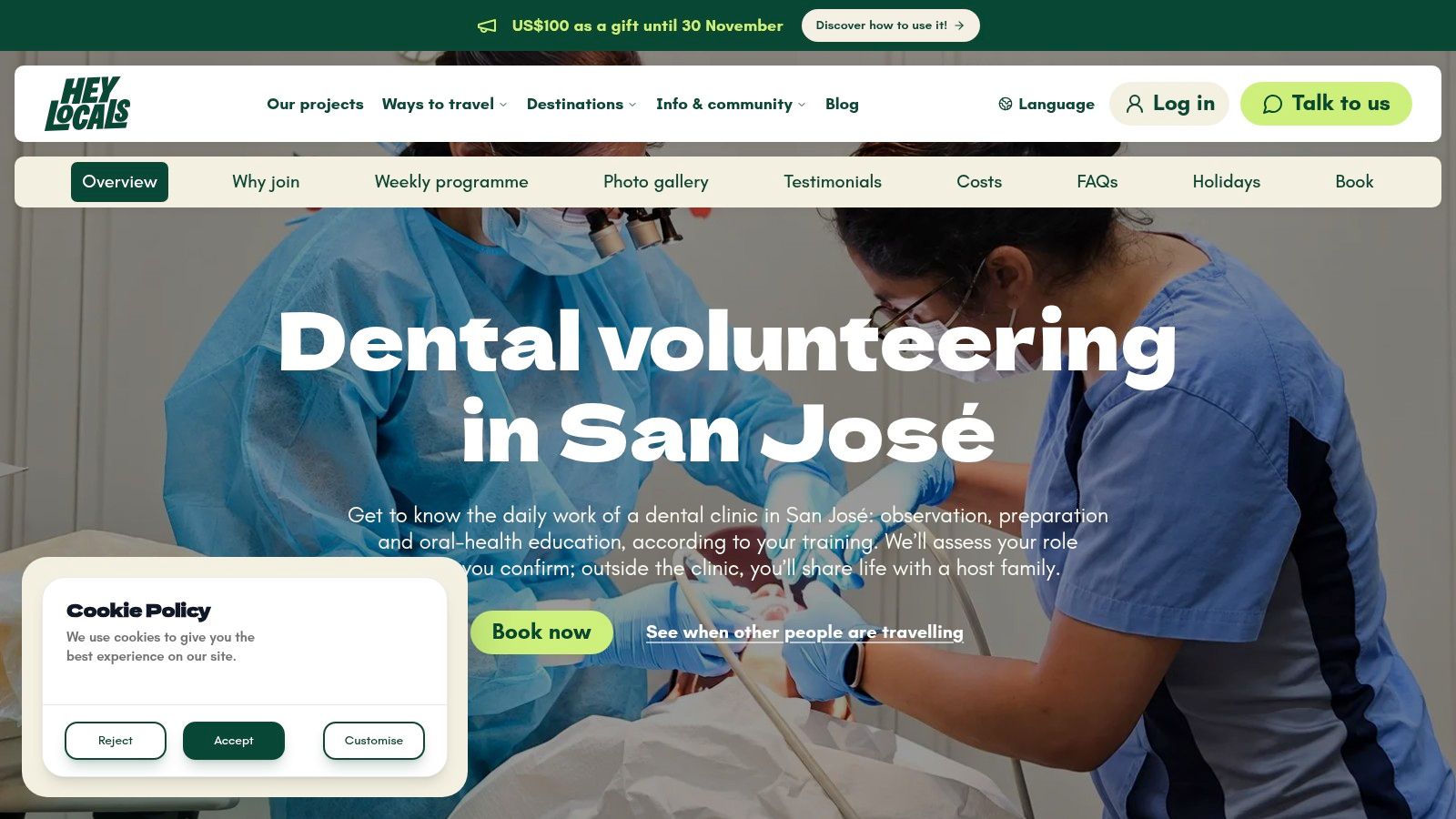
A family's shared interest in healthcare doesn't give every member the same access to a clinic. In San José, the proposed activities are observation, preparation and oral-health education according to training, with a role assessment before confirmation. Outside the clinic, volunteers share life with a host family.
The distinction from the San José shelter is responsibility, not generosity. Clinical staff must prioritise patients, and an accompanying child can't automatically join because a parent has an approved role. Relevant studies or skills may be required for healthcare activities.
Make consent part of preparation
Explain to children that patients aren't taking part in a family learning activity. A patient must be able to decline observation or interaction, and a volunteer should accept that decision without argument.
Safeguarding also matters wherever volunteers encounter children. The Lancet Child & Adolescent Health paper on misguided altruism describes risks associated with volunteering in residential childcare, including harm and disrupted attachment. A clinic placement is different, but families should still reject the idea that good intentions justify unrestricted access to vulnerable people.
Appropriate access: Stay within the role and spaces authorised by clinic staff.
Clear consent: Don't photograph patients or share identifying details without proper permission.
Suitable responsibilities: Don't undertake treatment or specialist tasks beyond your competence.
A workable family plan: Resolve supervision before travel rather than expecting clinic staff to provide childcare.
Compare roles before comparing fees
The listed activities overlap with the Antigua clinic, so the descriptions alone don't establish which is better for your family. Compare the approved role for each traveller, host-family arrangements, local travel and confirmed fee inclusions.
Ask whether insurance covers the specific activities you've been assigned, rather than describing the trip only as volunteering. Prepare an accurate account of relevant education and skills, and don't treat informal interest as a clinical qualification.
This option suits a family prepared to learn within strict limits. It doesn't suit a plan built around everyone doing hands-on healthcare together, and it shouldn't be presented to a teenager as guaranteed clinical experience before their role has been assessed.
5. Dental volunteering in Cusco
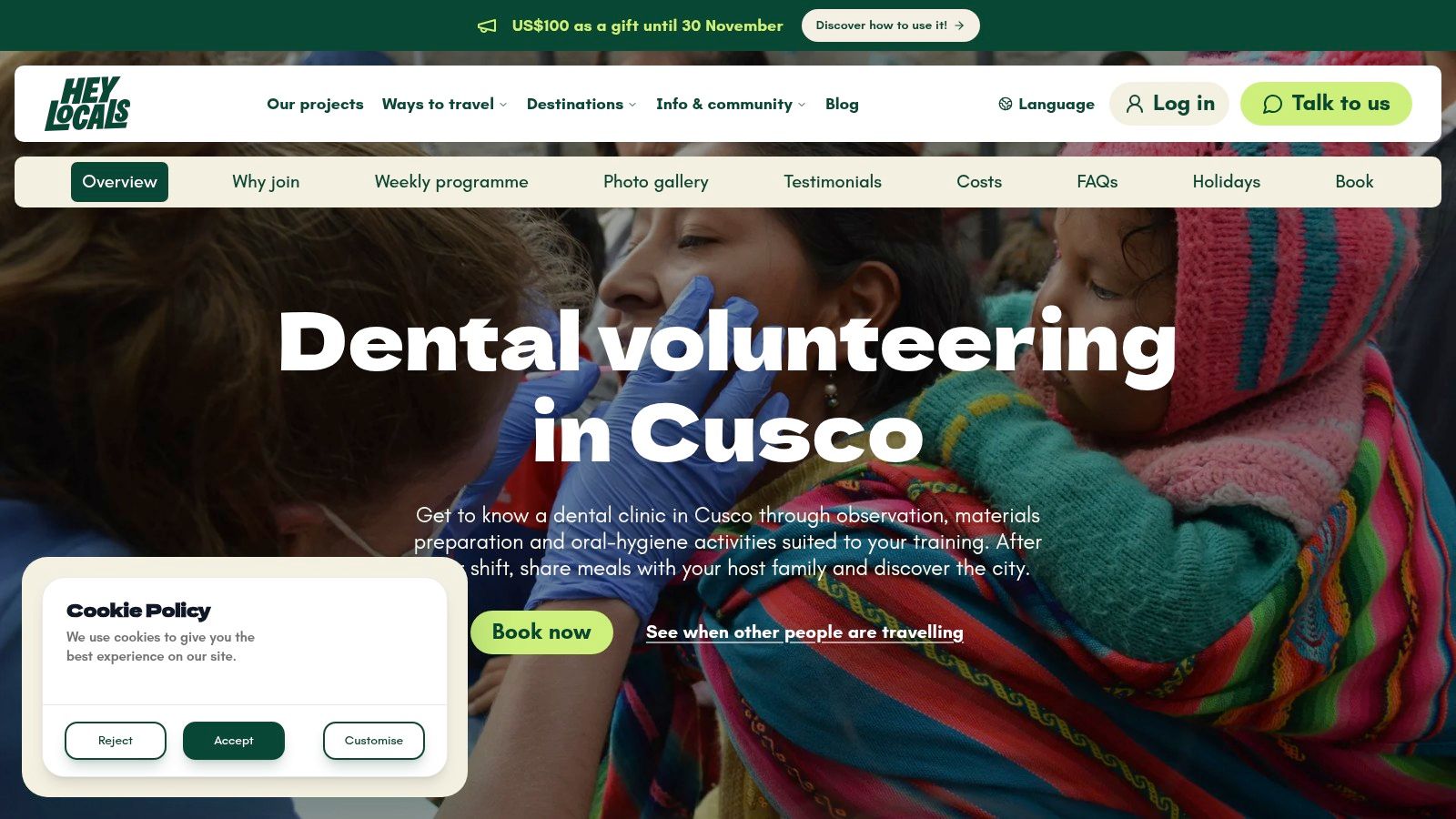
Cusco's altitude can make a busy first few days harder for children and adults alike. Keep sightseeing plans flexible until you know how the family is adjusting and what the project routine requires.
The placement description lists clinic observation, materials preparation and oral-hygiene activities. It also describes meals with a host family. Confirm the clinic's access arrangements and the family's route there before booking, since these details affect how much time and energy you'll need each day.
Separate family learning from patient care
An adult may be comfortable observing treatment while a child becomes distressed or loses concentration. Plan how to respond without interrupting clinic staff or leaving the child unsupervised. A shorter approved activity is preferable to a longer shift the family can't manage safely.
A useful boundary: Your family's learning should fit around the clinic's work, not require the clinic to change patient care.
The available description doesn't justify a claim of greater clinical access or easier family participation than the other dental options. Confirm each traveller's approved role, including any age or participation limits, before treating the placement as a shared family activity.
Prepare for the Cusco routine
Host-family life means sharing someone's home, so clarify sleeping arrangements, meal expectations and dietary needs. Ask how the family will get to the clinic and whether the daily schedule leaves enough room for rest, especially at the start of the stay.
Altitude and travel fatigue can affect how much sightseeing is realistic after project activities. Leave room to adjust plans rather than assuming the family can manage full days at the clinic and around the city.
How the five placements compare for families
| Item | Category | Location | Typical role | |---|---|---|---| | Dental volunteering in Antigua | Healthcare | Antigua | Clinic observation, preparation, and oral-health education | | Dog and cat shelter volunteering in Manuel Antonio | Animals and Local Wildlife | Manuel Antonio | Prepare meals, clean spaces, and walk or play with animals | | Dog and cat shelter volunteering in San José | Animals and Local Wildlife | San José | Prepare meals, clean spaces, and walk or play with animals | | Dental volunteering in San José | Healthcare | San José | Clinic observation, preparation, and oral-health education | | Dental volunteering in Cusco | Healthcare | Cusco | Clinic observation, materials preparation, and oral-hygiene activities |
Choosing a Family Placement You Can Actually Manage
The strongest family volunteering vacations have clear limits. Everyone knows what they may do, parents understand their responsibilities, and local staff can continue their work without treating the visiting family as an exception to normal procedures.
For shared practical tasks, an animal shelter may offer a more natural starting point than a dental clinic. For a family with relevant healthcare interests or training, a clinic may be appropriate, but participation still depends on individual eligibility. Neither category guarantees that everyone can work together throughout the shift.
Use this checklist before committing:
Confirm age fit: Establish a suitable role for the youngest and oldest members, including anyone who may only observe or cannot join.
Map supervision: Identify who supervises each child, who directs the work and what happens if someone needs to leave early.
Check safeguarding: Understand the applicable conduct rules, criminal-record checks, consent requirements and reporting route.
Compare full costs: Match the published inclusions against flights, insurance, visas, local transport and personal expenses.
Prepare early: Work on the project's basic English requirements and confirm any relevant studies, skills or documents.
Under-18s need a parent or guardian involved in the process, and healthcare placements may require relevant studies or skills. Local coordinators provide guidance on location, while our team supports preparation before departure.
Use the Find my project tool to identify a possible match, then work through the practical details with the team before confirming. HeyLocals does not offer free volunteering, so start budgeting from the published fee and add the expenses outside it. A manageable placement with clear boundaries is a better choice than an inspiring description your family can't safely fulfil.
HeyLocals organises volunteering trips with local organisations and helps families assess project suitability, prepare for departure and access support during their stay. Visit HeyLocals, use Find my project, and share your family's ages, interests and relevant skills so the team can help you evaluate a realistic placement.
In this article
- Table of Contents
- 1. Dental volunteering in Antigua
- 2. Dog and cat shelter volunteering in Manuel Antonio
- 3. Dog and cat shelter volunteering in San José
- 4. Dental volunteering in San José
- 5. Dental volunteering in Cusco
- How the five placements compare for families
- Choosing a Family Placement You Can Actually Manage