
Volunteer Opportunities Students Can Explore Abroad
Explore volunteer opportunities students can pursue abroad, with details on timing, eligibility, costs, and learning goals to help you choose the right
You're a second-year student with a short summer break, a budget spreadsheet and several destinations open in your browser. The difficult part isn't choosing somewhere interesting. It's finding work that fits your age, English, available dates and actual abilities without taking on responsibilities you're not qualified to hold.
The best volunteer opportunities students can explore abroad make those boundaries clear. You join activities that already exist and help where it's useful, with what you can offer. Your fee helps cover hosting costs, including accommodation, meals, activity organisation and the people supporting you, though arrangements vary by destination.
These education and community placements offer different ways to contribute. Compare the daily role before the scenery, and separate classroom support from professional teaching. If you're pursuing formal teacher development, you can enroll directly in DELTA modules, but that's a separate decision from choosing a student volunteering placement.
Table of Contents
1. Teaching in Palawan
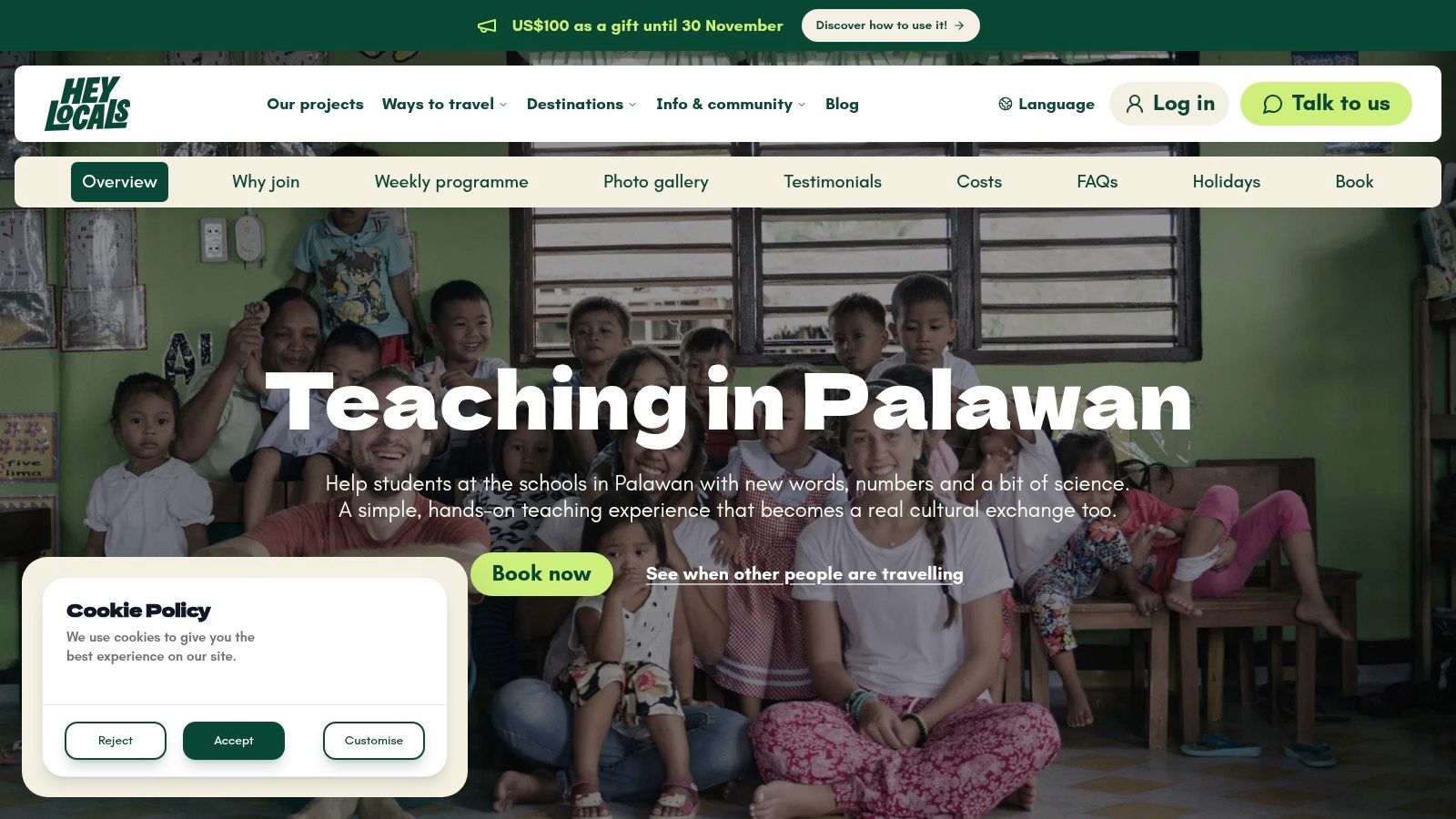
Best suited to students who enjoy explaining simple ideas and preparing practical activities. Teaching in Palawan involves helping school students with vocabulary, numbers and basic science. The useful contribution is patient classroom support, not arriving with a new curriculum.
A sensible activity might involve matching pictures to words or using familiar objects for counting, subject to the local teacher's approval. Prepare something easy to adapt rather than a complicated presentation that depends on equipment. The teacher's existing lesson should determine what you bring.
Compare the role with your actual skills
Our general entry point is age 16 with basic English sufficient for everyday conversation and instructions. That doesn't mean every classroom task suits every participant. For this placement, establish whether you'll support activities, explain vocabulary or help prepare materials, and whether your spoken English matches those responsibilities.
Timing: Confirm the placement's minimum stay and what students will be doing during your proposed dates. Year-round project activity doesn't guarantee an identical classroom timetable throughout the year.
Costs: Compare the destination-specific inclusions with your travel budget. Don't assume every transfer, excursion or teaching material is included.
Boundaries: You won't act as a primary teacher. Lesson ownership and responsibility for pupils remain with the local team.
Practical rule: Bring an activity you can explain clearly, adapt easily and leave with the teacher. Don't build a lesson around being the centre of attention.
Make the learning specific
A meta-analysis indexed by ERIC covering 62 service-learning studies and 11,837 students found positive effects across self-attitudes, attitudes toward learning, civic engagement, social skills and academic performance. That supports choosing a placement with clear responsibilities and reflection, not assuming that travel alone delivers educational value.
Keep a brief record of what you prepared, what the teacher changed and what you'd do differently. For a university portfolio, describe the task and feedback rather than claiming you transformed pupils' learning.
A useful alternative for comparison is Teaching in schools in Hua Hin, where volunteers help children and students practise English through games, songs and creative activities while learning about everyday Thai life. Choose between them by the work you're comfortable supporting, not by which destination sounds more impressive.
2. Teaching in schools in Chiang Mai
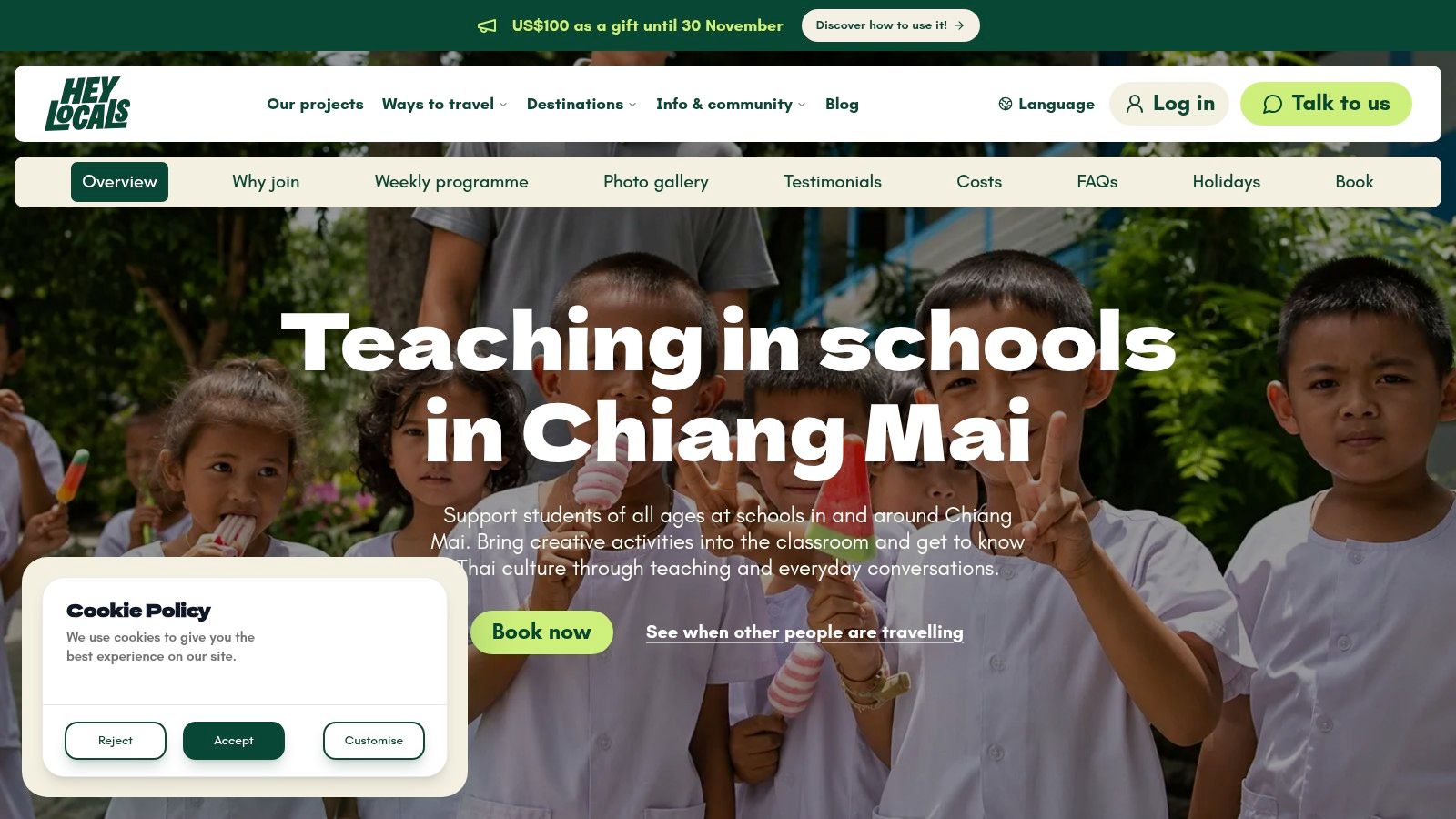
A game that works with younger learners may fall flat with older students. That's the main preparation challenge with Teaching in schools in Chiang Mai, which supports students of different ages at schools in and around the city.
Choose this placement if you're willing to adapt rather than repeat a fixed activity. Creative classroom work and everyday conversations can support cultural exchange, but the local teacher should set the level, purpose and boundaries. Being outgoing helps less than being prepared to listen.
English confidence matters more than performance
Basic conversational English is our general participation requirement. For classroom support, test yourself more practically: can you explain a game without rushing, demonstrate the task and recognise when someone hasn't understood? If not, preparing visual materials or supporting a teacher-led exercise may be a better starting responsibility than giving instructions.
Our guide to school volunteering and education trips is a useful preparation resource. Before committing, establish the expected learner group, the supervision arrangement and what you'll do when lessons aren't running.
Age and duration need separate decisions. Our general starting age is 16, with parent or guardian involvement for minors, but suitability still depends on the placement. Confirm the minimum stay and actual activity dates before buying flights.
Separate the placement budget from sightseeing
The fee helps meet hosting and coordination costs, with inclusions varying by destination. Build a separate allowance for flights, visas, insurance and personal travel rather than treating the programme fee as your complete trip cost.
If you're planning free-time travel, use My Money Mentor Plus Chiang Mai tips as a starting point for ideas, not as a substitute for checking project commitments. Don't book an outing that clashes with preparation or classroom time.
What works: Teacher-approved activities, clear instructions and materials that suit the learners.
What doesn't: Treating the classroom as public-speaking practice or expecting independent teaching authority.
What to record: Feedback on your communication, preparation and ability to adjust.
A cross-national study published in Nonprofit and Voluntary Sector Quarterly found that résumé-focused students didn't volunteer at higher rates than students with other motivations. Choose work you're willing to do, then document what you learn. A destination name alone says little about your contribution.
3. Childcare in Zanzibar
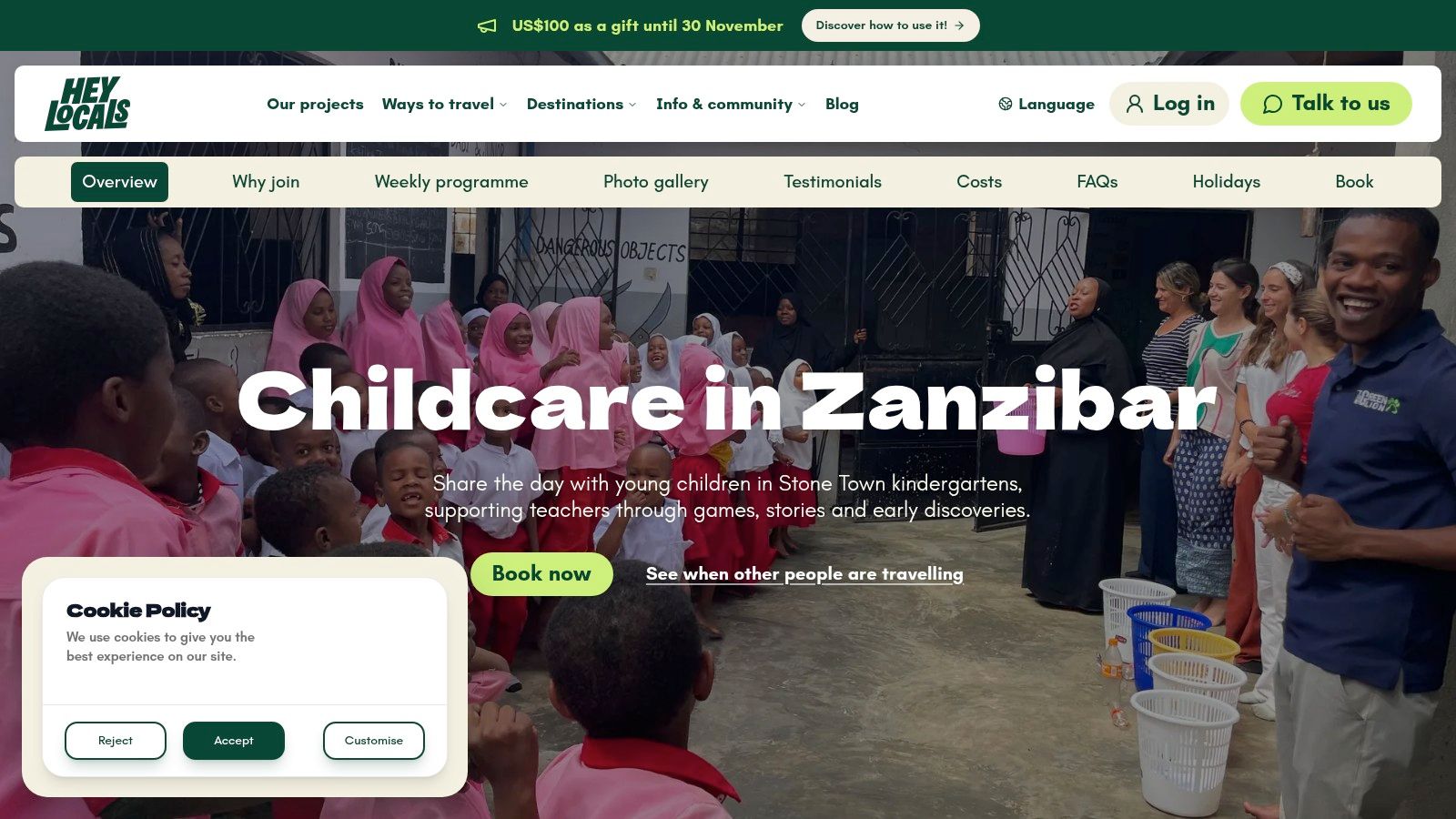
The word childcare needs careful reading. Childcare in Zanzibar involves taking part in everyday school life and supporting children's engagement with learning. It isn't permission to become an independent carer.
For a student considering education or child development, the useful experience is observing routines and supporting activities under local direction. You might prepare for shared learning through simple, reusable activities, but the team must define your actual duties. Don't infer responsibilities from the project title.
Short-term volunteers never act as substitute parents, primary teachers or sole caregivers. A friendly relationship with a child doesn't change that boundary.
Safeguarding comes before enthusiasm
Our projects are community-led, and some involve children or adults at risk. Volunteers must declare any criminal record, and minors need parent or guardian involvement. Our published safeguarding and responsible-volunteering policies should inform your preparation, not remain unread booking documents.
Read our guidance on volunteering at a daycare to consider the difference between helping with routines and taking responsibility for care. Then establish the on-site reporting route, who supervises activities and what to do if you're uncomfortable with an instruction.
Age: Participation generally starts at 16, but confirm suitability for this child-facing setting.
English: Basic English is the general baseline. You must also understand instructions affecting children's safety.
Role limits: Don't accept sole supervision or improvise personal-care responsibilities outside your agreed role.
Judge the placement by continuity
A study published in Tourism Recreation Research linked lasting community outcomes in youth voluntourism to sustained participation and depth of reflection, while shorter programmes more commonly produced volunteer-centred benefits. Your positive feelings after a trip aren't evidence that children benefited.
For a short stay, look for activities that staff can continue without you. Leave organised materials and a factual handover rather than creating a routine dependent on your presence. Avoid making promises about returning or maintaining personal contact.
Confirm the minimum stay, school activity schedule and fee inclusions before booking. Accommodation and meals form part of hosting costs, but destination arrangements differ, and flights, visas, insurance and personal extras need their own budget. This is a stronger choice for someone comfortable following established routines than for someone seeking autonomy.
4. Community teaching in Siem Reap
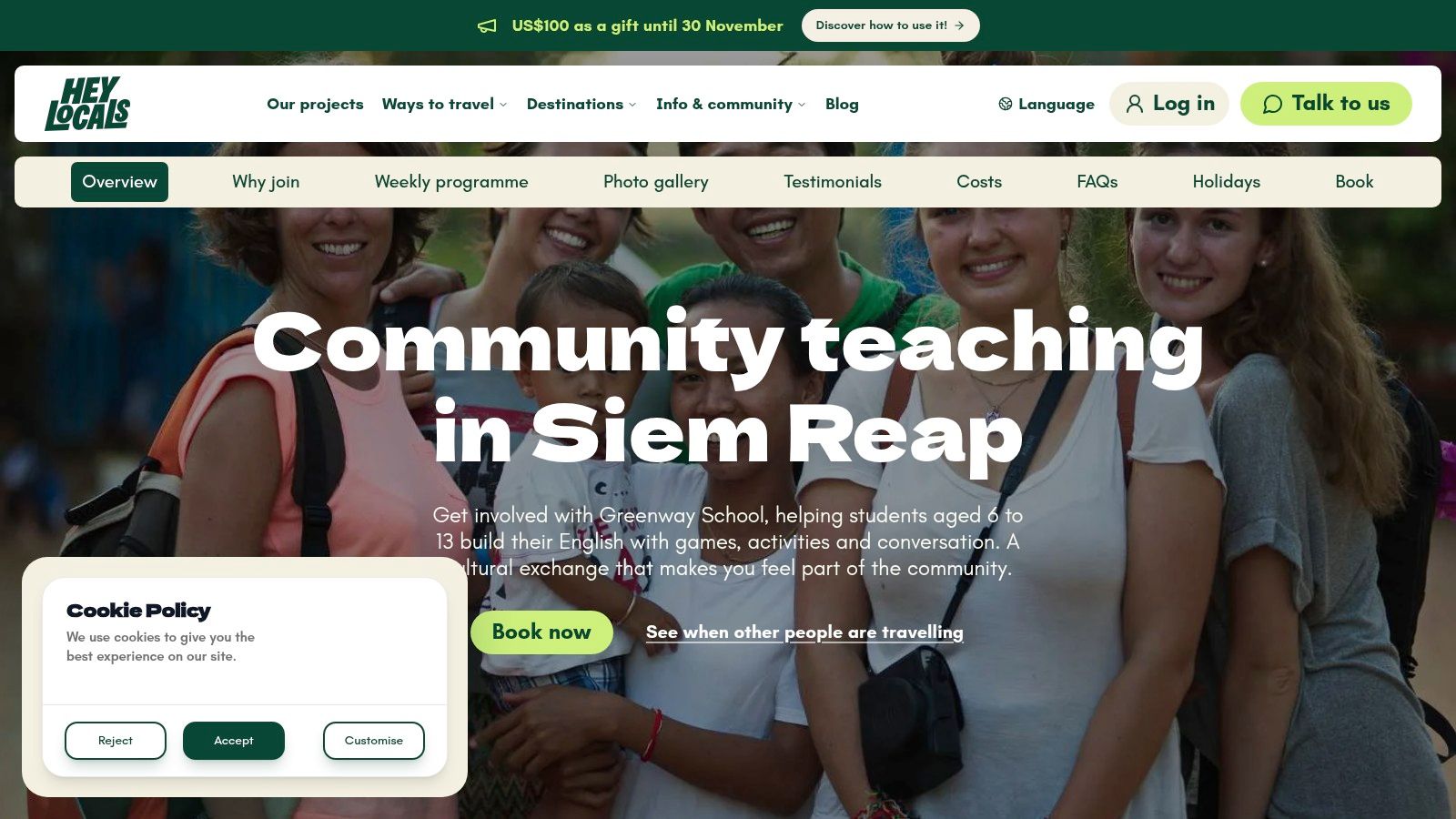
Suppose you prepare a vocabulary game, but the teacher needs learners to practise material they already know. The right response is to adapt your game, not defend your preparation. That willingness to follow an existing plan matters in Community teaching in Siem Reap.
The placement involves Greenway School, supporting English through games, activities and conversation. Its practical appeal is a clear subject focus. Students who enjoy language practice may find it easier to prepare for than a broader community role, provided they don't confuse speaking English with knowing how to teach it.
Compare a short stay with a useful task
Our partner projects operate year-round, but your dates still need to match the local programme. Confirm the minimum stay, teaching schedule and responsibilities available during your visit. Don't assume a short holiday window automatically fits a school's needs.
A manageable contribution could be helping run an approved conversation activity or preparing reusable vocabulary materials. These are examples to discuss with the coordinator, not guaranteed assignments. The local team should decide whether they're useful.
Before booking: Be able to explain what staff will keep using after you leave. If your answer is only photographs and memories, clarify the task.
Our general eligibility starts at 16 with basic English, with parent or guardian involvement for minors. For English-focused support, be honest about pronunciation, listening confidence and your ability to explain a task. You shouldn't accept responsibility for a class beyond your competence, and you won't replace its primary teacher.
Prepare for the less visible work
The attractive part is conversation and cultural exchange. The necessary part may include preparation, repetition and following instructions that differ from your expectations. Choose this project if you can value those tasks without needing constant novelty.
Fee comparison: Separate hosting and coordination inclusions from flights, visas, insurance and optional activities.
Learning goal: Practise giving clearer instructions and responding to teacher feedback.
Handover: Record which materials you used and where learners needed support, without collecting unnecessary personal information.
For university purposes, keep your learning goal narrow enough to evaluate. A reflection on how you simplified instructions is more credible than claiming general expertise in education after a short placement. If academic credit matters, agree your university's requirements before departure rather than expecting attendance alone to satisfy them.
5. Community support for women in Nakuru
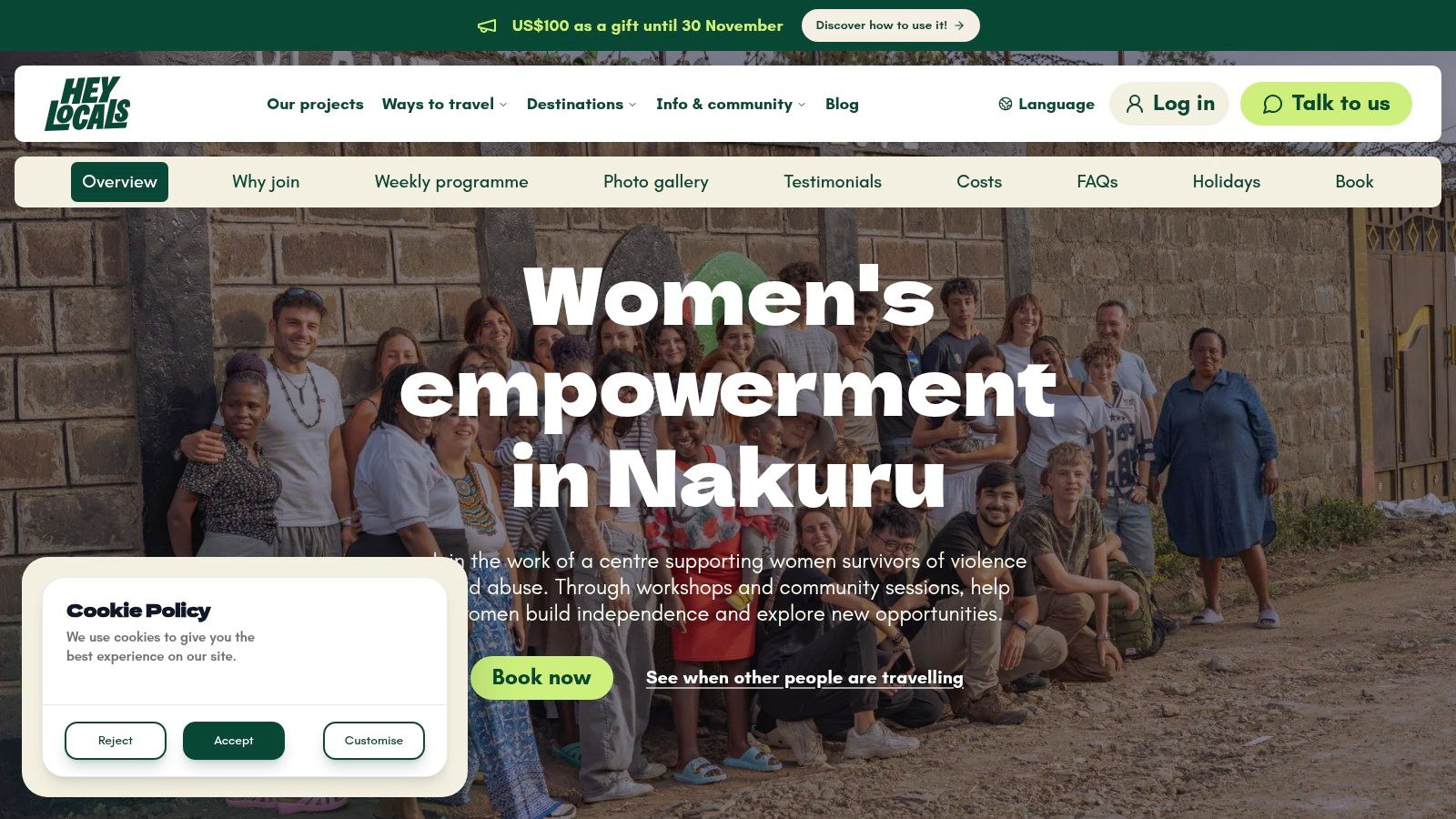
This placement requires different boundaries from classroom volunteering. Community support for women in Nakuru supports a centre working with women who have survived violence and abuse. Workshops and community sessions focus on independence and practical opportunities.
Your strongest contribution is a clearly scoped task that staff request and can supervise. That might mean preparing a workshop activity or organising resources. Counselling survivors, investigating abuse and providing legal advice remain the responsibility of qualified local staff.
Put participant choice ahead of your learning
A centre isn't a source of personal stories for an assignment or social-media account. Don't ask women to explain traumatic experiences, photograph participants without the appropriate permission or promise financial help. Follow the local team's instructions on privacy and contact.
Our guide to projects supporting women's independence gives wider context for this kind of placement. Before selecting it, make sure the actual responsibilities fit your maturity, communication skills and ability to respect professional boundaries.
For this centre, the practical filter is whether you can hold a workshop activity to a fixed timetable and take direction on privacy without improvising. Confirm with the coordinator which sessions are open to volunteers and which are staff-only. Volunteers must also declare any criminal record for safety reasons.
Check access and support as carefully as purpose
A global volunteering survey published by IAVE reported that 65% of respondents faced socioeconomic barriers and 18% cited risk and safety concerns. Those figures make practical arrangements a sensible part of choosing any placement.
Schedule: Confirm the minimum stay and which sessions fall within your dates. Don't expect staff to create work around a last-minute itinerary.
Access: Establish any accommodation or accessibility needs before committing. Don't assume shared facilities will meet them.
Support: Know your local coordinator and the route for raising concerns about conduct or safety.
Budget: Check destination-specific fee inclusions and reserve money for travel documents, insurance and personal expenses.
This placement suits students interested in community development who can accept a supporting role. It will frustrate anyone expecting independent casework or direct responsibility for someone's recovery. A useful learning goal is understanding how staff organise requested activities while protecting participant choice and privacy.
How the five student volunteer placements compare
The five roles look similar on paper. The difference is who runs each session, because participants never act as substitute parents, primary teachers or sole care-givers.
| Item | Focus area | Who you work with | Who supervises | |---|---|---|---| | Teaching in Palawan | Education and classroom activities | School students | Local classroom teacher | | Teaching in schools in Chiang Mai | Education and creative classroom activities | Students of all ages | School teaching staff | | Childcare in Zanzibar | Education and childcare | Students aged 5 to 14 | Childcare centre staff | | Community teaching in Siem Reap | English education and community engagement | Students aged 6 to 13 | Community programme staff | | Community support for women in Nakuru | Community support and independence workshops | Women survivors of violence and abuse | Centre staff during sessions |
If a task drifts beyond a supporting role, raise it with your local coordinator.
Choosing Your Student Placement and Planning Ahead
Start with age, English, dates and total cost. Volunteers can join from 16 with basic English that allows everyday conversation and understanding instructions, but each role still needs a suitability check. For minors, involve a parent or guardian before making arrangements.
Then compare what you'll do. Palawan offers support across basic classroom subjects, Chiang Mai requires flexibility across learner groups, and Siem Reap focuses on English activities. Zanzibar needs particular care around child-facing responsibilities, while Nakuru calls for clear boundaries around sensitive community work.
Make the booking decision concrete
Use the project descriptions to write a short account of your expected working day. If you can't distinguish your tasks from those of a teacher, carer or specialist, resolve that before committing. No previous volunteering experience is usually needed, but that doesn't mean every responsibility is appropriate for beginners.
Confirm the calendar: Match your arrival, induction and working dates to the local programme before buying flights.
Calculate the full cost: Volunteering isn't free. Add flights, visas, insurance, personal transport and extras to the destination-specific fee.
Understand support: Local coordinators provide guidance on the project, and our team supports volunteers before, during and after travel.
Plan the handover: Choose a contribution that staff can continue, and leave materials or notes in the format they request.
You can browse volunteer options for students to broaden your shortlist, but compare actual responsibilities rather than destination labels. Use our Find my project tool to match your interests and dates, then compare the relevant project pages side by side.
Choose the placement where you understand the task, can afford the complete trip and know where your responsibility ends. That's a sounder decision than choosing the most dramatic description or the cheapest headline fee.
HeyLocals organises international volunteering trips with local organisations and helps students prepare for suitable roles. Visit HeyLocals to use Find my project, compare placements against your dates and interests, and get guidance on eligibility and trip arrangements before booking.