Gap Semester Ideas: 8 Ways to Plan a Break That Works
Practical gap semester ideas: pick one anchor placement, plan realistic blocks, and use our budget and decision checklist before you book.
What if the problem isn't finding enough gap semester ideas, but trying to fit too many into too few months? You have a semester, not a full year. That changes the maths.
A semester works best with one clear anchor. You spend several weeks in one confirmed education, community or conservation placement, learn its routine properly, and build any travel around that block. You don't need a packed route across several countries, and you shouldn't plan as if a short break can carry the same depth as a year away.
Be clear about the limits too. A gap semester isn't automatically an internship or study abroad programme, and it doesn't promise university credit, a professional qualification or unrestricted visa eligibility. If you're pausing an offer, start by understanding deferrals with Mrs. College Counselor and confirm your university dates in writing.
Below are eight ways to build a break that works, two planning examples, and a checklist. The theme is simple. Fewer moves. Clearer routines. Honest expectations about the daily work.
Table of Contents
1. Community School Support in Kandy, Sri Lanka
The first week in Kandy rarely involves teaching your own class. You arrive at a school where lessons already run every day, meet the staff who set the routine, and slot into the gaps they point out. You join ongoing classroom and school activities run by a local organisation rather than a project built around your visit, and that shapes how you prepare.
Your role is normally support: preparing materials, supervising games, assisting with English practice and working alongside local teachers. Because you support rather than lead, you have time to learn each pupil's level and understand what the teachers need. Several weeks in one school turns that familiarity into reliability, which is what makes the placement useful. No previous volunteering experience is usually needed for a role like this, though you should be comfortable holding a basic conversation in English.

A Workable Block
Four weeks helping with English games and materials, followed by a short trip before your semester resumes, is a complete plan on its own. It gives you a routine, a natural handover point and rest built in.
Ask about the role: classroom support, activity preparation or both, and what the daily hours look like.
Plan rest days: leave a gap between the placement and onward travel.
Prepare for week one: ask what a useful first week looks like, so you arrive with simple activities ready.
The checklist at the end of this guide covers the duration, start-date and activity questions worth confirming on the project page. For a comparison in another region, Teaching in Esparza supports teachers with language, sport and cultural activities in Esparza's schools. You share ideas in the classroom and get to know everyday life in a rural Costa Rican community.
2. School Support in Nakuru, Kenya
If East Africa is your focus, Nakuru offers a structured school setting where familiarity is the point. You work within the existing routines of a local school and its staff. The pace, format and expectations may feel different, and adapting to that is part of the work.
Typical tasks include supporting lessons, preparing learning materials, helping with reading and joining practical activities. A block of several weeks lets you build familiarity with pupils and teachers instead of constantly starting again. That continuity helps the school, and it gives you something concrete to describe later.
Practical rule: Pick the daily tasks you can sustain, even over a less exciting destination.
How to Make the Block Count
A useful observation day in a Nakuru classroom starts. You sit in on a morning lesson, watch how the teacher paces explanations and groups pupils, then run a short activity with a small group in the afternoon. Teachers and educators get the most from this kind of block by bringing simple, adaptable activities that need few materials, then adjusting them once local teachers show what fits.
Ask teachers directly: What would they find most useful from a volunteer this term?
Write brief evening notes: Record what worked, what didn't and what you'd change.
Keep a skills record: Note explaining, preparing activities and working to a different routine.
Prior volunteering experience usually isn't needed, since you join a project that is already running. Don't assume a school placement carries academic or professional recognition, though, because it doesn't do so automatically.
3. Sea Turtle Conservation on Nusa Penida, Indonesia
Most of the hours go to washing tanks and preparing feed. The rest involves cleaning facilities, helping with observation and shared practical tasks alongside local staff. If that steady, physical routine appeals to you, Nusa Penida in the Bali region can anchor a semester well. If it doesn't, choose something else.
A block of several weeks lets you learn the protocols, understand the seasonal rhythm and contribute reliably rather than briefly. You don't need previous volunteering experience for most placements, though basic English is generally expected.
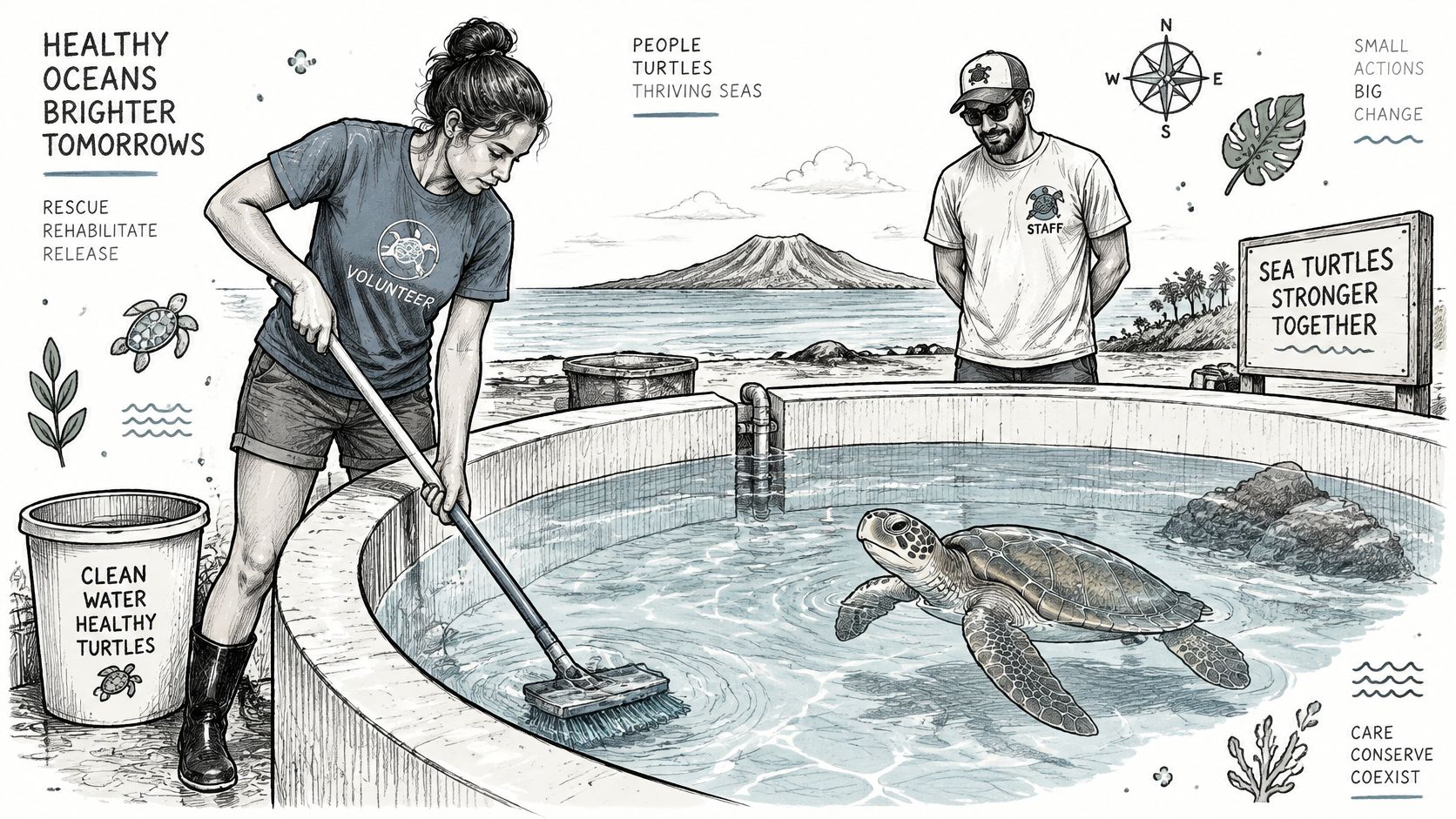
A typical block runs several weeks of feeding and cleaning routines, with the remaining days kept free for rest and onward travel. That pace is more realistic than adding a second wildlife project immediately afterwards. For background on the work itself, read about rescuing sea turtles before you apply.
Ask about routine tasks: Which jobs happen daily, and which are occasional?
Budget separate journeys: Allow for travel to the island and any transfers.
Pack practically: Bring clothing for wet, physical work and check guidance on conduct around wildlife.
Zanzibar is the other listed option if you want somewhere quieter. Sea turtle conservation in Zanzibar places you in Makunduchi, a fishing village well off the tourist trail, where you lend a hand, learn from the local community and watch a young pilot project develop.
4. Education Block in Tarrafal, Cape Verde
Choose Tarrafal when you want one anchor school placement in a smaller setting, with a routine you can learn properly. The work centres on supporting school education within the local school's programme, so you back up local teachers rather than taking over their classes.
A block of several weeks gives you time to understand pupils' needs and contribute to ongoing activities. In practice, that means planning short English games, preparing simple materials, explaining instructions clearly and adjusting when an activity lands differently with a group.
The current listed option, Education in Tarrafal schools, involves joining teachers in Tarrafal to help children practise English through games and creative activities. You share ideas in the classroom and get to know everyday life in this coastal Cape Verdean town.
Logistics in a Smaller Setting
A teacher on leave could use the block to support classroom activities, then compare routines with their own school afterwards. Plan arrival, transfers and rest days carefully, because options differ from larger destinations.
Confirm airport travel: Ask how you'll reach the placement and whether collection is included.
Add spare days: Build in time in case transport is delayed.
Check entry rules yourself: Use official government sources for your nationality before booking.
Keep the semester plan spare around it: one school block, then travel, fits better than stacking another classroom placement straight after.
5. Teaching and Childcare Support in Zanzibar, Tanzania
How long does a child need to trust a new adult in the room? Longer than a short stay allows. Children settle with people they see every day, and local staff get real help once you know names, routines and expectations. That is why Zanzibar works best as your anchor block, the one placement the rest of the semester is planned around.
Your role is to support and assist. The local team keeps overall responsibility for the children, and your job is to fit into their programme. A block of several weeks lets you plan activities that suit the group and repeat what works, so children meet the same games, songs and exercises often enough to learn from them.
What did local staff teach you, what task could you do more reliably by the end, and what would the next volunteer need to know?
Use those reflection prompts weekly.
A steady pattern works well here: spend your first week watching how staff run activities, then take over simple, repeatable tasks you can pass to the next volunteer with clear notes. If you're weighing this against another teaching placement, this guide to volunteering in Costa Rica helps you compare routine and fit.
Prepare a handover: Ask what notes the next volunteer will need.
Keep routines consistent: Follow project guidance on conduct with children at all times.
Declare any criminal records: The safeguarding policy requires this from participants before travel.
Participants under 18 can join only with written consent from a parent or legal guardian, and only on placements designated suitable for under-18s. Most teaching and childcare placements ask for no previous volunteering experience, though basic English is expected.
6. Medical Support Placement in Rural Palawan, Philippines
Healthcare projects can require relevant studies or skills, so check eligibility before dates, flights or travel plans. If you do not meet the requirements, choose a different anchor rather than trying to make this one fit.
You work alongside local staff who live and work in the area. Your role follows your background and the team's needs, and it stays within clear limits: you do not replace qualified professionals, and you should not arrive expecting a fixed list of procedures.
A Realistic Way to Plan It
A health-sciences student might confirm eligibility early, arrange the requested documents, then use the block to observe and support local activities under guidance. Build in generous travel time to reach a rural base and keep the first days light enough to rest and learn the routine. A slower start makes the later weeks more useful.
Confirm eligibility first: Check required studies or skills on the project page before anything else.
Check preparation properly: Look at health and insurance needs against current official sources for your nationality.
Ask about supervision: Clarify who guides you and which tasks are permitted.
Participation does not award a professional qualification. What you can record is supervised experience, observed practice and what you learned about working within defined boundaries.
7. A Two-Project Gap Semester Planning Example
This is a planning example, not a packaged HeyLocals itinerary. Treat it as a way to test dates and energy, not as a product you can book as written. Fewer moves and a clear routine are usually easier to assess than an ambitious multi-country schedule.
Start with one main placement. Add a second project only if its role, dates, minimum stay and onboarding are compatible with the first. Each change needs agreement, and you shouldn't assume free transfers, automatic discounts or a right to switch on arrival.

Sample Block
Three weeks at one school placement, five travel and rest days, then a second short placement only if dates and minimum stay match. Budget for separate journeys and orientation time at each base. Keep at least a few buffer days to absorb delays.
Confirm each onboarding: Minimum stay, role and start process come first.
Plan the handover: This is essential if you're leaving a child-facing project.
Record your evidence: Keep hours, tasks and supervisor feedback as you go.
That record helps later when you decide where to place volunteer experience on a CV. Be specific about tasks you did. Don't rename volunteering as an internship unless your university formally approves that classification.
8. Budget, Time and Decision Checklist for a Gap Semester
Decide on one cause first, then the daily work, then the place. From there, filter by what you can realistically sustain: the tasks you can do week after week, the living conditions that suit you, and the dates and language requirements that apply. Speak with the team about one base before adding another.
Be honest about the work itself. Someone unsure about teaching should understand the difference between classroom English and support with games or materials. Someone drawn to animals should expect cleaning and preparation alongside observation. Eligibility shapes your options too: you must be at least 18 to book, healthcare projects can require relevant studies or skills, and basic English is expected for most placements.

A realistic budget has two parts. The project fee normally covers accommodation, meals, airport pick-up, local activity coordination and support during your stay. The separate costs are yours to estimate: flights, visa fees, insurance, transport beyond the airport transfer, personal spending, and a contingency for delays. If your window is shorter than a full semester, the same checklist works for shorter formats like alternative spring breaks.
Run through this checklist before you commit:
Build the full budget: Price every separate expense, not just the fee, and use this guide to plan a trip without overspending.
Check each inclusion: What the fee covers varies by project, so read the specific project page.
Match dates to the minimum stay: Some placements start from one week; others need longer.
Narrow with the tools: The free questionnaire takes about two minutes and suggests projects based on your interests, dates and travel style.
Comparing the Gap Semester Options and Planning Blocks
Compare what job each option does in a gap semester plan. A school placement suits a steady routine, conservation suits repetitive practical work, and healthcare depends on relevant studies or skills.
| Option | Project type | Semester role | Typical block shape | |---|---|---|---| | Community School Support in Kandy, Sri Lanka | School support | Steady anchor for education-focused plans | One several-week placement with classroom support and activity preparation | | School Support in Nakuru, Kenya | School support | Anchor for hands-on school experience | One several-week block treated as support experience, not a teaching qualification | | Sea Turtle Conservation on Nusa Penida, Indonesia | Marine conservation | Anchor for routine fieldwork | One practical block where cleaning and preparation sit alongside observation | | Education Block in Tarrafal, Cape Verde | School support | Anchor for a smaller-community pace | One settled block, with travel time kept around the placement | | Teaching and Childcare Support in Zanzibar, Tanzania | Teaching and childcare support | Anchor where consistency matters most | Several weeks of regular support; background-check self-declaration applies | | Medical Support Placement in Rural Palawan, Philippines | Healthcare support | Anchor for health-related applicants | One block tied to eligibility, studies or relevant skills | | A Two-Project Gap Semester Planning Example | Multi-project planning example | Secondary pattern when dates align | Two shorter blocks separated by travel and rest, with compatible onboarding | | Budget, Time and Decision Checklist for a Gap Semester | Planning checklist | Decision tool, not a placement | Use before booking to compare dates, eligibility, fees and separate expenses |
Pick the block that can carry the semester first. If a second project still makes sense, plan it as one connected timeline rather than assuming the next start date will fit neatly after the first.
Your Next Step, One Placement, Confirmed
Choose one anchor placement with realistic dates, a routine you understand, and enough time around it to travel, rest and return without rushing. That is the framework behind every idea in this list, and it is the standard your semester should meet before you book anything.
The details differ by project, but the test stays the same. Can you name the daily tasks you will do reliably? Do you know who supervises you, where you will live, and what happens when you leave? Have you confirmed the permitted duration and activities for that specific destination rather than assuming another location works the same way?
Those questions protect your momentum. A structured block with a clear role is easier to explain to a university or employer than an unplanned break, and it gives local staff something they can use, because you arrive prepared for support work rather than expecting to lead.
What the semester gives you is a focused period to practise useful skills. Education placements can involve preparing activities and explaining clearly. Conservation work can involve following protocols, careful observation and shared practical tasks. Community programmes can involve listening, collaborating and adapting to a different routine. How much you learn depends on your role, your preparation, your length of stay and your engagement.
So keep your shortlist short. Pick the cause first, then the daily work, then the place. Leave buffer days between blocks, and plan your handover if children are involved. Most placements do not require previous volunteering experience, though healthcare projects may ask for relevant studies or skills. If you are under 18, you can travel only with written consent from a parent or legal guardian and only on placements designated suitable for under-18s.
Your one useful next step is this. Complete the free HeyLocals questionnaire, which takes about 2 minutes and carries no obligation. It suggests projects based on your interests, dates and travel style, so you can then speak with the team about a single anchor placement, its permitted duration and its confirmed dates. Before you book, check inclusions, eligibility and entry requirements on that specific project page.
HeyLocals organises international volunteering trips with local organisations across Asia, Africa and Latin America, including education, conservation and community placements that can anchor a gap semester. You can use the questionnaire and project search to shortlist one placement by interests, dates and travel style, then get individual guidance before you decide. Start by visiting HeyLocals and choosing the one base you'd like us to check with you first.
In this article
- Table of Contents
- 1. Community School Support in Kandy, Sri Lanka
- 2. School Support in Nakuru, Kenya
- 3. Sea Turtle Conservation on Nusa Penida, Indonesia
- 4. Education Block in Tarrafal, Cape Verde
- 5. Teaching and Childcare Support in Zanzibar, Tanzania
- 6. Medical Support Placement in Rural Palawan, Philippines
- 7. A Two-Project Gap Semester Planning Example
- 8. Budget, Time and Decision Checklist for a Gap Semester
- Comparing the Gap Semester Options and Planning Blocks
- Your Next Step, One Placement, Confirmed