Volunteer Experience Examples: 5 Real Roles Explained
Realistic volunteer experience examples from education, conservation and healthcare placements, with roles, limits and practical takeaways for your trip.
What would you do on a volunteering trip, and who decides whether you should do it? Those are practical questions, and the useful answer is rarely found in broad claims about transformation. A clearer view starts with the work itself: preparing materials, cleaning equipment, following instructions and handing tasks back to local staff.
These five labelled examples follow a classroom in Nakuru, a conservation routine in Nusa Penida, a scoped healthcare placement in rural Palawan, a materials handover in Tarrafal and community school teaching in Kandy. They show three things for each role: what the volunteer does, who decides the task and where the volunteer's responsibility stops. They are examples of bounded roles, not accounts of individual volunteers or promises of activities. Your assignment must be confirmed for your placement.
The distinction matters when you're choosing a trip. HeyLocals volunteer projects are community-led, and in some cases include contact with children and adults at risk. Local coordinators look after volunteers while they are on their project, while local staff set priorities, supervise participation and retain responsibility after visitors leave. Short-term volunteering does not replace professional care, and participants never act as substitute parents, primary teachers or sole caregivers. Impact means a supported outcome, not completing an activity or having a memorable experience.
For the broader travel perspective, the Approved Experiences Traveler immersion guide offers a useful companion to thinking about your place in a host community.
Table of Contents
1. Education Role Example Preparing Picture Cards for a Teacher in Nakuru
2. Conservation Role Example Supporting a Recurring Tank-Care Routine in Nusa Penida
3. Healthcare Role Example A Scoped Placement in Rural Palawan
4. Education Role Example Materials Handover and Continuity Note in Tarrafal
5. Education Role Example Supporting Community School Teaching in Kandy
1. Education Role Example Preparing Picture Cards for a Teacher in Nakuru
Labelled role example: In a school classroom in Nakuru, Kenya, you prepare picture cards for an activity the teacher has agreed to run. The teacher chooses the subject, checks the materials and decides when and with which pupils to use them.
Your contribution might involve drawing or printing the agreed images, cutting the cards and arranging them into labelled sets. Before making anything, check the teacher's preferred vocabulary, image choices and storage method. An attractive set isn't useful if it doesn't match the planned activity.

What You Contribute and What Stays With the Teacher
Say the teacher requests cards showing familiar objects. You prepare a draft, let the teacher check it, then finish the approved set and leave it where they've asked. You're making materials ready, not independently designing the curriculum, leading lessons or assessing children.
That boundary makes the role suitable for someone who enjoys practical preparation and can accept direction. A qualified educator may bring relevant skills, but qualifications don't transfer classroom authority away from the local teacher. Our participants never act as substitute primary teachers or sole caregivers.
Before travel: Ask our local coordinator what materials the teacher has requested rather than buying supplies speculatively.
During preparation: Keep completed cards separate from unfinished work, and use the teacher's labels so everything is easy to find.
Before booking: Confirm the live offer's age requirements, dates, minimum duration and language expectations.
Our guide to volunteering at a daycare is relevant if you're comparing education support with younger-child settings. Don't assume those settings carry the same responsibilities or routines.
Practical rule: Prepare what the teacher wants to use, not what you'd most like to teach.
A responsible description afterward would explain which materials you prepared and who approved them. It wouldn't claim improved learning without evidence from the school.
2. Conservation Role Example Supporting a Recurring Tank-Care Routine in Nusa Penida
Tank cleaning can be repetitive, wet and physically demanding. This role suits people who can work through a recurring routine in heat, follow staff instructions closely and stay steady through practical tasks that may be repeated daily.
You help prepare food and complete an assigned tank-care routine under local staff direction. Staff decide the sequence, tools, hygiene procedures and safety limits, including when volunteers must step back. The work is community-led, and local coordinators look after volunteers while they are on their project.
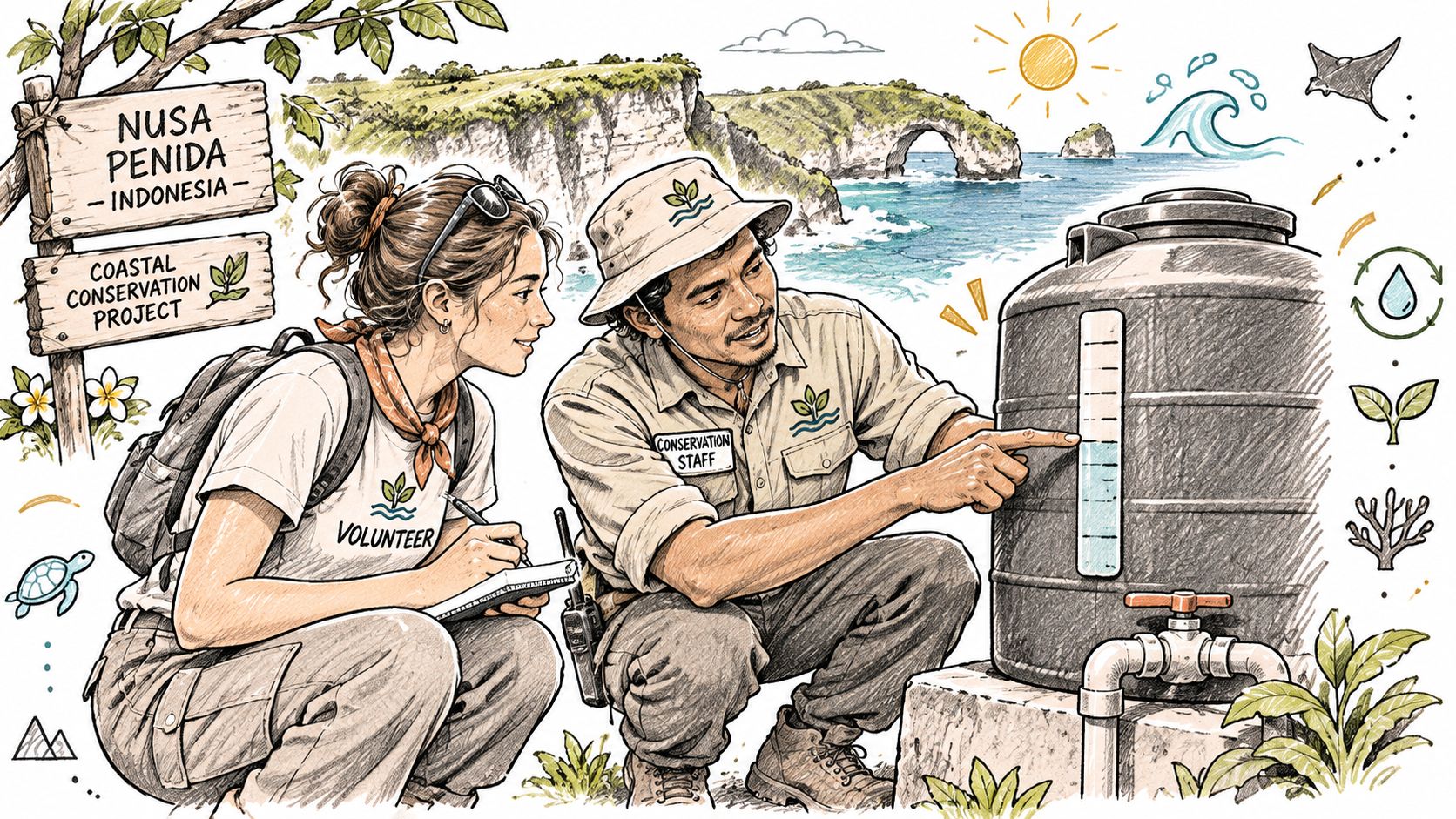
The Bali sea-turtle conservation project page lists tank cleaning, food collection, feeding and growth monitoring among its activities. Those activities describe an established project routine. Volunteers support the tasks assigned by the local team and help where it is useful with what they can offer.
A Useful Routine, With Clear Limits
A worked example might begin with staff explaining which tank needs attention and demonstrating the approved cleaning method. You carry out your assigned part, return equipment and report anything unusual rather than deciding how to respond yourself. Observation and reporting are different from diagnosis or treatment.
Food preparation also needs a clear definition. Preparing animal feed is different from preparing meals for the team, which may form part of day-to-day support only where the placement includes it. Staff confirm which activity is intended, so volunteers do not treat all kitchen work as animal care.
The practical fit is straightforward. You need to arrive ready for sun, heat, water and physical work, with suitable footwear confirmed against the project guidance. You also need to accept that the routine may feel repetitive. The value is in reliable support, careful hygiene and accurate reporting, not in taking control of animal care decisions.
Prepare for the conditions: Pack for heat, sun and physical work, with suitable footwear confirmed against the project guidance.
Learn the routine: Ask staff what's expected at the start of the week, including hygiene procedures and how to report concerns.
Keep tasks in scope: Carry out the assigned tank-care or food-preparation task, then hand observations back to the local team.
Our guide to rescuing sea turtles provides further context for this project type. Most placements do not require previous volunteering experience, but this role still depends on practical reliability, basic English for everyday conversations and instructions, and a willingness to follow local staff procedures.
3. Healthcare Role Example A Scoped Placement in Rural Palawan
A healthcare placement in rural Palawan works within clear boundaries. Your role depends on your background, the host's needs and the activities confirmed for you individually. Healthcare projects may require relevant studies or skills, so eligibility needs checking before acceptance.
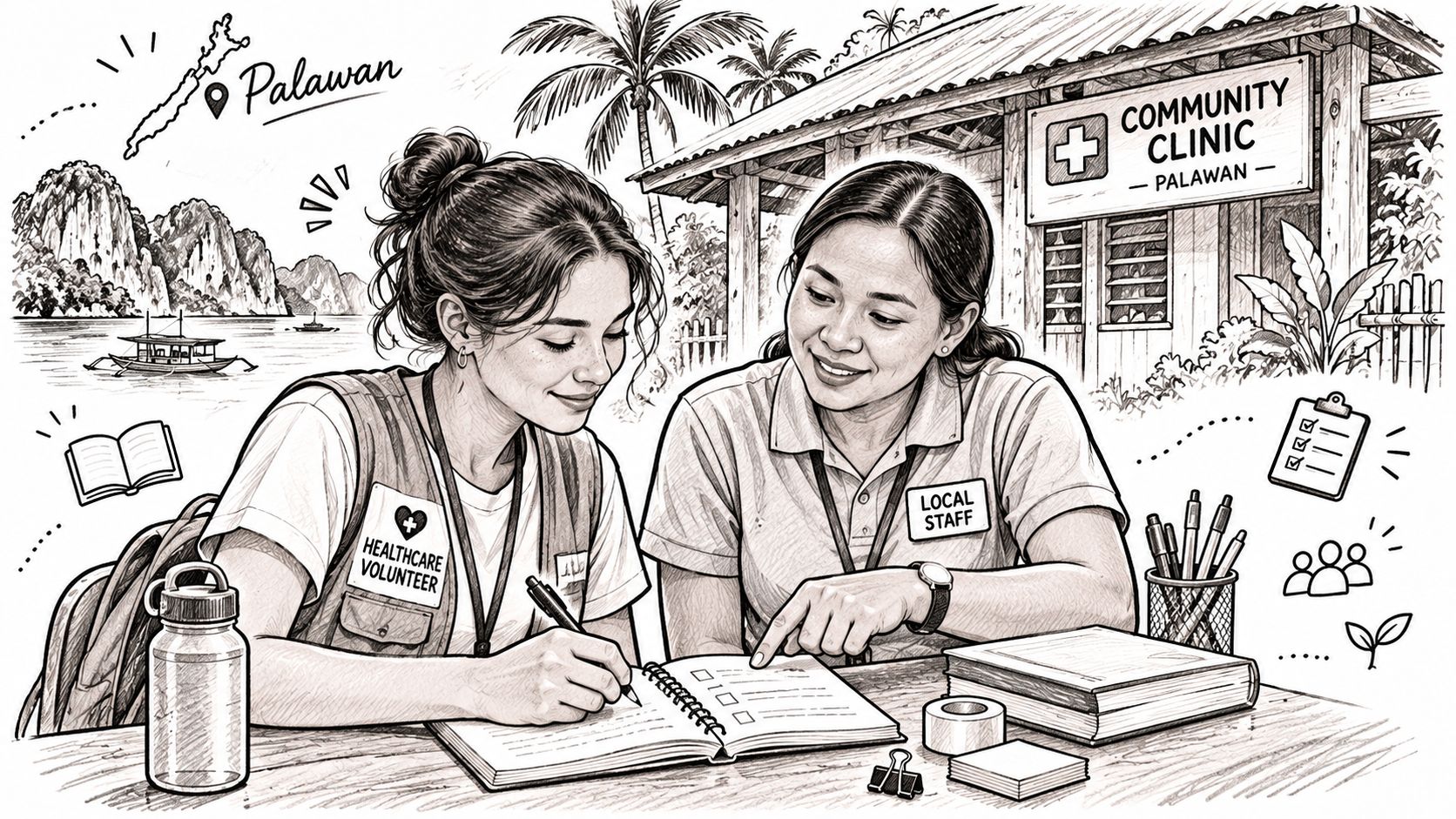
An eligible participant might join supervised learning alongside local staff or carry out an agreed non-clinical support assignment. A specific task could involve organising approved, non-confidential materials at a staff member's request. Observing consultations is another possibility only if the host confirms that it is appropriate and sets out consent, confidentiality and supervision requirements.
Confirm the Assignment Before You Commit
These examples stay deliberately narrow. They give the local team control over what is useful and keep volunteer activity inside the placement's agreed scope. They do not grant permission to diagnose, prescribe, treat patients or perform procedures.
Global-health guidance on visiting trainees emphasises adequate supervision and mentorship to protect patient care. For you, that means knowing who supervises the assignment, what you may access and whom to contact if something falls outside your agreed scope.
A healthcare placement gives you clear boundaries and works within your qualifications.
Before booking, get written confirmation of the role, eligibility requirements and supervision arrangements. Keep professional qualifications separate from participant requirements, and provide each where requested. Declare any criminal record as part of the participant requirements for safety reasons. That declaration does not establish clinical competence.
If you have a healthcare background, Medical volunteering in San José is a separate option for getting to know a local facility and supporting its staff. Suitable activities are discussed against your studies and experience, so a title alone does not determine your role.
Our nurse volunteering abroad guide can help frame those questions. The trade-off is practical: a tightly scoped placement may offer less hands-on involvement than you imagined, while a safe placement keeps patient care with qualified local staff and keeps your work within the activities you were given.
4. Education Role Example Materials Handover and Continuity Note in Tarrafal
A short handover can be a practical education task. In Tarrafal, Cape Verde, the value sits in leaving the next session understandable for the teacher and the people continuing the activity.
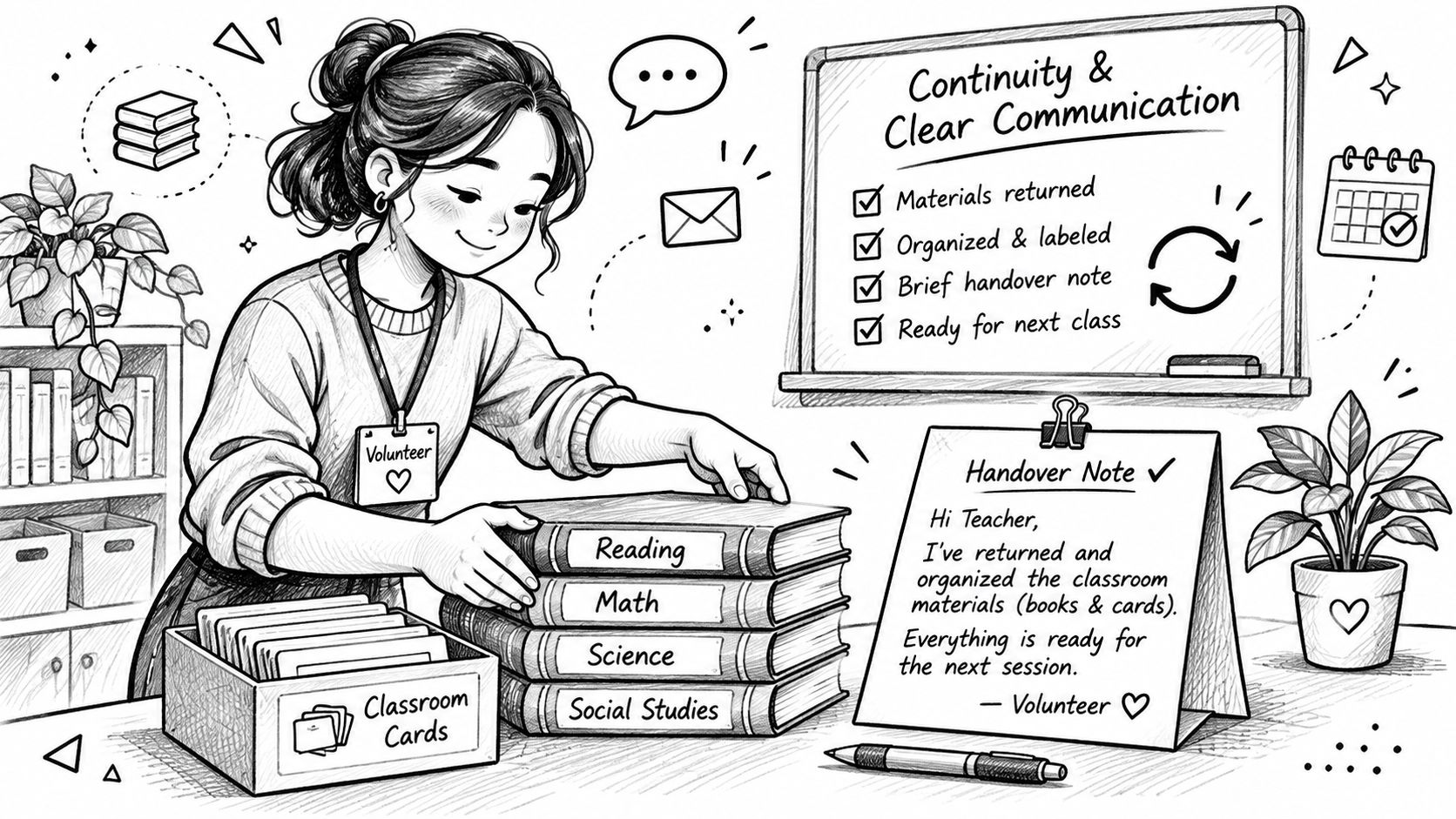
Materials role: You return classroom materials in order and leave a short note explaining what was covered and what the teacher wants next. This is a continuity process that leaves the next session understandable.
Make the Handover Easy to Use
Suppose you've helped with an approved picture-card activity. Return each set to its labelled folder, separate damaged materials and ask the teacher what they want recorded. Your note could identify the activity completed, where you stored the cards and which preparation task the teacher has requested next.
Keep the note factual and brief. Don't add informal assessments of children, unnecessary personal details or a new teaching plan that nobody requested. Write in simple English if that's the agreed working language, and let the teacher choose the format and storage location.
Record completed work: Distinguish materials that are ready from those still awaiting the teacher's approval.
Attribute next steps: Make clear which follow-up the teacher requested rather than presenting your suggestion as an instruction.
Protect information: Use the school's approved process for records, and don't keep pupil information on your own device.
Continuity over novelty: Leave the existing work understandable to the people who remain.
This task suits an organised person who doesn't need every contribution to involve leading a group. The limitation is equally important: a tidy handover can document what you completed, but it doesn't prove better educational outcomes. Local staff decide what belongs in the record and how the next activity should proceed.
For a participant perspective, read first-hand volunteer accounts. Treat each account as one person's experience, not a promise about your placement.
5. Education Role Example Supporting Community School Teaching in Kandy
Kandy suits volunteers who want classroom involvement through a local plan. The useful starting point is an ongoing community school activity, with local teachers responsible for their classes and local coordinators helping clarify where support is useful.
In this role, you assist with an activity the teacher has already planned. The teacher and coordinator decide your task, and you work alongside them. You support the session structure instead of taking charge of the lesson.
The work can include distributing approved materials, demonstrating a familiar exercise with the teacher or helping pupils follow instructions. You check what to do if a pupil needs help, and you refer questions beyond your assignment back to the teacher. If another approach seems more entertaining, you do not change the task without the teacher's direction.
This role can fit educators, students exploring education and travellers who enjoy collaborative classroom work. Teaching experience helps only when it adapts to the school's priorities. Someone who wants independent control over lessons will find this a poor fit.
Prepare selectively: Learn basic local phrases, and bring simple English materials only if the teacher requests them.
Clarify the day: Ask the coordinator about school hours, dress expectations, routines and the English level needed for your assignment.
Discuss participation needs: If you are travelling as a family or need adjustments, explain those needs before matching so the proposed tasks can be assessed.
The Brookings-hosted evaluation of international volunteering found gains in international awareness, international social capital and internationally oriented career intentions. It found no measurable improvement in perceived intercultural relations.
Keep your own learning separate from school outcomes. You may become better at following classroom routines or understanding how teachers organise activities. That does not establish that pupils learned more because you attended.
Before choosing Kandy, confirm the English-language needs of the school assignment and whether your level matches the instructions you will be expected to understand.
The five volunteer role examples at a glance
| Role example | Project type | Who decides the task | Typical activities | Best suited for | |---|---|---|---|---| | Preparing picture cards in Nakuru | School education support | Local teacher | Prepare and organise materials for a teacher-led activity | People who prefer clear, practical tasks and have little or no teaching experience | | Supporting tank care in Nusa Penida | Conservation support | Local project staff | Follow a recurring tank-care routine; help with team meal preparation if included | People comfortable with physical, structured and sometimes repetitive work | | Scoped placement in rural Palawan | Healthcare-related support or supervised learning | Local project; tasks confirmed for each participant | Take part in confirmed supervised learning or non-clinical support; no patient treatment | Students or professionals who meet the stated eligibility requirements | | Materials handover in Tarrafal | School education support | Local teacher decides next steps | Return materials in order and leave a short note on what was covered and what comes next | People who value organisation, continuity and clear communication | | Supporting community school teaching in Kandy | Community school education support | Local teacher and coordinator | Assist with activities planned and led by local teachers | People who want to support classroom activities alongside local teachers |
Choosing the Role That Fits You and What to Do Next
Pick the work you can reliably do. Most HeyLocals projects do not require previous volunteering experience, but each placement still has its own practical demands. Local organisations run the activities, and local coordinators guide volunteers while they are on placement. Your job at this stage is to choose a role where your skills, limits and travel preferences fit the task on offer.
Compare Responsibilities Before Destinations
Match the actual task: Look at the workday in practical terms: preparation, cleaning, administration, classroom assistance, animal care routines or supervised learning. A role title gives less useful information than the task you are being asked to carry out.
Check current placement details: Review age rules, dates, minimum duration, English requirements, accommodation, meals, transfers and separate expenses. Arrangements included in the fee vary by destination, because each local organisation hosts volunteers according to its resources and the project's needs.
Keep eligibility clear: Safeguards, age conditions and any role-specific requirements each serve a separate purpose. The healthcare example in section 3 shows how supervision and eligibility boundaries can narrow what a volunteer may do.
Partner priorities should guide the final choice. A host organisation's needs tell you more about fit than an assumption about how busy the trip will feel. An independent evaluation of Australia's international volunteer program found the program highly relevant to overseas partners' development needs and generally effective in supporting capacity-development objectives. Treat that as a reason to ask what the local organisation wants from volunteers, while keeping the finding separate from any individual HeyLocals placement.
The same distinction matters when choosing community partners for CSR: the host's priorities come before the visitor's preferred activity. Public reviews can help you understand relationships, orientation and daily routines. They cannot show whether a task is authorised, supervised or suitable for your circumstances, so use them as context rather than as the deciding factor.
Make the final decision by checking three things: the task, the person who decides it, and the boundary around it. If you can follow the agreed routine, respect its limits and contribute without taking over, the role is a stronger fit. A modest, well-matched assignment is a better choice than an ambitious role you are not prepared or authorised to perform.
HeyLocals organises international volunteering trips with local organisations and supports travellers with preparation, matching and local coordination. Visit HeyLocals, use the Find my project tool and complete the questionnaire to find a placement suited to your interests, dates and travel preferences.
In this article
- Table of Contents
- 1. Education Role Example Preparing Picture Cards for a Teacher in Nakuru
- 2. Conservation Role Example Supporting a Recurring Tank-Care Routine in Nusa Penida
- 3. Healthcare Role Example A Scoped Placement in Rural Palawan
- 4. Education Role Example Materials Handover and Continuity Note in Tarrafal
- 5. Education Role Example Supporting Community School Teaching in Kandy
- The five volunteer role examples at a glance
- Choosing the Role That Fits You and What to Do Next